Quick answer: A law firm, bank, or executive interview generally rewards a conservative black or dark-brown lace-up worn with a suit. The shoe should look familiar, cared for, and less memorable than the candidate's answers. In these settings, a cap-toe Oxford or plain Derby rarely creates unwanted distraction.
Dress code by industry
A law firm, bank, or executive interview generally rewards a conservative black or dark-brown lace-up worn with a suit. The shoe should look familiar, cared for, and less memorable than the candidate's answers. In these settings, a cap-toe Oxford or plain Derby rarely creates unwanted distraction.
Creative, technology, and less formal workplaces allow more range, but the interview outfit should still look one step more deliberate than ordinary office wear. A refined loafer, restrained brogue, or dark dress sneaker may fit the culture when paired with appropriate trousers. Research employee photos and recruiter guidance rather than assuming every modern office has the same standard.
Safest colors and toe designs
Black works with charcoal, black, and many navy suits and communicates maximum formality. Dark brown pairs naturally with navy and medium gray while appearing slightly warmer. Light tan, two-tone designs, and dramatic patina attract more attention and are better reserved for roles where personal style is clearly valued.
Plain toes and cap toes are easiest to place in conservative interviews. Moderate broguing can work with a textured suit or business-casual outfit, while elongated, square, or aggressively pointed toes can date the look. The goal is a balanced shape that does not force the interviewer to interpret a fashion statement.
Polish and condition inspection
Check the toe caps and outside edges under direct light, where dust and scuffs become obvious. Brush smooth leather, use a small amount of compatible cream polish, and buff away residue. Clean welt edges and heel blocks as well; a shiny toe above a dirty sole still looks neglected.
Do not attempt an unfamiliar restoration treatment the night before. Excess wax can crack, mismatched polish can alter color, and quick-gloss products may leave an artificial finish. A clean, softly polished pair is safer than chasing a mirror shine that does not suit the shoe or office.
Quiet soles and walking confidence
Interview days often include polished lobbies, stairs, and a walk from parking or transit. A stable heel and dependable traction help the wearer move naturally instead of taking guarded steps. Test for squeaks, loose heel taps, and slippery foreparts on clean indoor surfaces before the appointment.
If a smooth leather sole feels uncertain, a cobbler may be able to add an unobtrusive rubber protector, but allow time for the work. Thick athletic soles can reduce formality, so balance traction with the expected dress code. Confidence comes from a shoe that disappears during movement, not one that requires constant adjustment.
Fit testing before interview day
Wear the shoes for several short indoor sessions with the intended socks. The heel should remain controlled, the widest part of the foot should meet the shoe's flex point, and the toes should not touch the front during a normal stride. Numbness or concentrated pressure is a sizing problem, not a break-in milestone.
Avoid debuting a new pair on interview morning. Even correctly sized shoes can reveal rubbing around the collar or tongue after thirty minutes. Prepare a discreet blister bandage, but choose another pair if the shoe already causes pain during an indoor test.
Creative-office exceptions
A design studio or fashion role may welcome a distinctive loafer, textured suede Derby, or minimalist leather sneaker. The exception works when the shoe connects to the company's visible culture and the rest of the outfit remains intentional. Cleanliness, fit, and condition do not become optional just because the dress code is relaxed.
When uncertain, choose the quieter option. It is easier to show personality through conversation and a small accessory than to recover from footwear that reads as careless or costume-like. After joining the company, observing colleagues will provide better information for future wardrobe choices.
CURRENT AMAZON OPTIONS
Use these as relevant comparison points.
As an Amazon Associate, we earn from qualifying purchases. Amazon links open the exact listing so you can confirm current size, color, price, and availability.

Stacy Adams · Black
Stacy Adams Dickinson Cap-Toe Oxford
A traditional cap-toe Oxford with a clean, formal profile and practical budget positioning.

Rockport · Black
Rockport Margin Oxford
A practical plain-toe option for shoppers who prioritize familiar fit and subdued styling.

Clarks · Dark tan leather
Clarks Tilden Cap Oxford
A classic cap-toe lace-up offered by Amazon in regular and wide sizing.
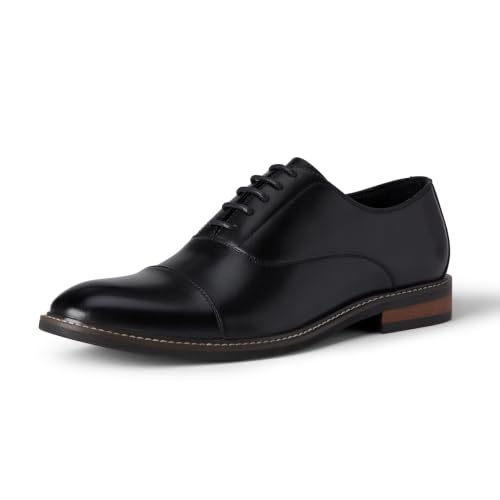
Amazon Essentials · Black
Amazon Essentials Men's Cap-Toe Oxford Dress Shoes
Cap-toe lace-up with a breathable high-rebound foam insole.
QUICK ANSWERS
Questions shoppers ask next.
Are brown shoes okay for an interview?
Yes. Dark brown shoes work especially well with navy and medium-gray suits and are accepted in most business settings. Black remains the more conservative option for highly formal industries or a charcoal suit.
Can men wear loafers to an interview?
A restrained dark leather loafer can work for business-casual or creative workplaces. For a traditional corporate, legal, or financial interview, a lace-up Oxford or Derby is the safer choice.
Are wingtips too flashy for interviews?
Not necessarily. A dark wingtip with moderate broguing can look professional, but heavy contrast, two-tone color, or an oversized sole may be distracting. Plain and cap toes remain more conservative.
Should interview shoes match the belt?
They should coordinate closely rather than match as if sold as a set. Pair black shoes with a black belt and brown shoes with a belt in a similar depth and temperature; small shade differences are normal.