Quick answer: Black is the most formal and least distracting partner for navy. Dark brown offers nearly as much versatility with a warmer, more approachable effect. Burgundy or oxblood adds controlled richness, while medium brown creates more contrast and works best for daytime or less conservative settings.
Black, dark brown, medium brown and burgundy ranking
Black is the most formal and least distracting partner for navy. Dark brown offers nearly as much versatility with a warmer, more approachable effect. Burgundy or oxblood adds controlled richness, while medium brown creates more contrast and works best for daytime or less conservative settings.
There is no single universal winner because navy ranges from nearly midnight to bright blue. The darker and smoother the suit, the more naturally black and espresso fit. Lighter navy and textured cloth can support cognac or medium-brown leather without making the shoes appear detached.
Daytime versus evening formality
Daylight tolerates more visible color variation, making brown and burgundy useful for offices, lunches, and daytime weddings. Medium-brown shoes can lift a navy suit, especially in spring or summer, as long as the event is not highly formal.
Evening lighting deepens the suit and rewards quieter footwear. Black or dark espresso keeps the silhouette composed for formal dinners, ceremonies, and presentations. Patent black is reserved for a tuxedo or a clearly specified black-tie dress code rather than an ordinary navy business suit.
Wedding, interview and office examples
For a wedding, consider the invitation, venue, and time. Dark brown or burgundy works for many cocktail and semi-formal celebrations, while black is safer for an evening ceremony. The groom should favor consistency with the wedding's stated level of formality over novelty.
For an interview in law, finance, or another conservative field, black or very dark brown cap-toe shoes minimize risk. Most everyday offices allow either. A medium-brown Derby or loafer can suit business casual, but a polished lace-up communicates greater authority for important meetings.
Belt and leather-accessory matching
Match the belt to the shoe family: black with black, deep brown with deep brown, and burgundy with burgundy or a close dark-brown alternative. Exact color duplication is unnecessary, but a pale belt with dark shoes looks accidental.
Leather texture should also agree. Sleek calf shoes call for a clean dress belt, while suede or grain leather can accept a more textured strap. A watch strap may coordinate, but it does not need to mirror both shoes and belt precisely.
Sock transitions between trouser and shoe
Socks usually create the smoothest line when they relate first to the navy trousers, not when they copy the shoe. Navy socks elongate the leg and work with every recommended shoe color. Subtle patterns may introduce burgundy, gray, or brown without dividing the silhouette.
Avoid pale athletic socks and high-contrast novelty patterns in formal settings. When sitting, the sock should cover the calf so no bare strip appears. Texture and pattern can increase in relaxed offices, but the background color should remain connected to the trousers.
Shoe styles that change the pairing
A black cap-toe Oxford presents the most traditional combination. A dark-brown plain-toe Derby is slightly softer, and a burgundy tassel loafer adds personality. Broguing, suede, contrast soles, and bulky welts progressively lower the formality regardless of color.
Use the suit's own structure as the guide. Sharp shoulders and fine worsted cloth favor sleek lace-ups; a softly tailored navy suit can support loafers or refined dress sneakers in permissive settings. Color succeeds only when the shoe's construction belongs with the garment.
CURRENT AMAZON OPTIONS
Use these as relevant comparison points.
As an Amazon Associate, we earn from qualifying purchases. Amazon links open the exact listing so you can confirm current size, color, price, and availability.

Stacy Adams · Black
Stacy Adams Dickinson Cap-Toe Oxford
A traditional cap-toe Oxford with a clean, formal profile and practical budget positioning.

Clarks · Dark tan leather
Clarks Tilden Cap Oxford
A classic cap-toe lace-up offered by Amazon in regular and wide sizing.

Cole Haan · Burgundy
Cole Haan Pinch Tassel Loafer
A heritage tassel shape that brings personality to navy, gray, and cream trousers.
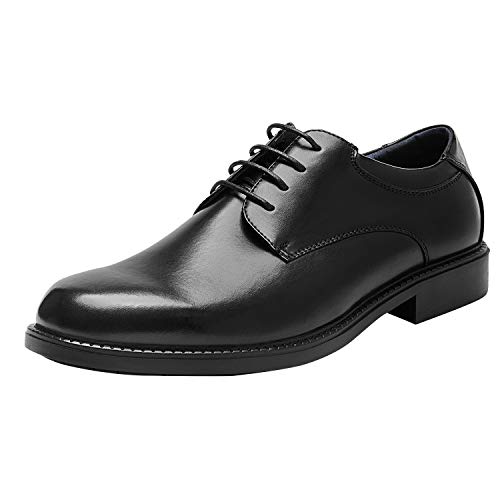
Bruno Marc · Black
Bruno Marc Men's Business Derby Lace-Up Shoes
Classic open-lacing derby with a cushioned latex insole and TPR outsole.
QUICK ANSWERS
Questions shoppers ask next.
Can you wear black shoes with a navy suit?
Yes. Black shoes are the most formal and conservative option for navy, especially for evening events, interviews, and traditional offices. A polished cap-toe or plain-toe lace-up is the safest expression.
What brown shade works best with navy?
Dark chocolate is the most versatile because it complements both deep and medium navy without creating a harsh contrast. Medium brown and cognac work better with lighter navy, textured suits, and daytime settings.
Can you wear oxblood shoes with navy?
Yes. Oxblood adds restrained color while remaining dark enough for many offices and weddings. It pairs particularly well with a white or pale-blue shirt and a belt in burgundy or a compatible deep brown.
Should a belt exactly match dress shoes?
No exact dye match is required. Keep belt and shoes in the same color family and at a similar level of formality; a small shade difference looks natural, while a dramatic difference looks unplanned.