Quick answer: A single monk uses one broad strap and buckle across the instep. The uninterrupted line is relatively calm and can substitute for a lace-up in many tailored outfits. A double monk adds a second narrower strap, more metal, and a stronger diagonal rhythm across the upper.
Single and double monk straps at a glance
The extra buckle does not automatically improve support. Fit comes from the last, strap placement, and available adjustment holes. Compare how securely each style holds your instep when both shoes are fastened normally.
1. Buckle impact
One buckle reads as a restrained closure detail. In dark brown or black calfskin, a single monk can sit close to a Derby in formality, especially when the sole is slim and the toe is plain. The buckle should lie flat rather than pulling the strap into a wave.
Two buckles create a recognizable statement and work best when the rest of the outfit is controlled. Bright hardware, contrast stitching, or an elongated toe compounds the effect. Choose silver-toned hardware for cooler, quieter outfits and darker or antique finishes when warm brown leather is central.
2. Fit and adjustment
A monk strap offers less fine adjustment than a multi-eyelet lace-up. The strap should close on a middle hole without pinching the instep or floating above it. If the foot slides forward even at the tightest setting, the shoe has too much volume rather than insufficient strap tension.
Double monks can distribute pressure across two points, but they can also expose differences in instep shape. Fasten both straps, walk on carpet, and check whether the lower buckle presses near the flex line. Elastic hidden beneath some buckles may ease entry but should not substitute for a stable last.
3. Formality
A polished single monk with a plain toe can accompany business suits and many weddings. It remains a step below the cleanest closed-lace Oxford for solemn or highly conservative settings. Black tie generally calls for a formal Oxford, wholecut, opera pump, or patent style instead.
Double monks thrive in creative offices, cocktail settings, and tailored smart casual. They can be worn with suits, but the buckles attract attention and may feel performative in a strict interview. Brown and burgundy are the most adaptable colors for this expressive lane.
4. Outfit simplicity
With either style, reduce competing hardware. A large belt buckle, flashy watch, patterned socks, and two shoe buckles can make the lower half look cluttered. Let one element lead; a double monk often works best with solid trousers and a subtle belt.
Single monks tolerate more pattern because their upper is calmer. Try them with gray flannel, navy tailoring, or a textured sport coat. For jeans, select a rounded or moderately shaped last and avoid a glossy formal finish that clashes with denim’s rough surface.
5. What to compare before buying
Compare single and double monk shoes with similar leather, color, and sole profiles. This makes buckle placement, strap reach, and instep fit easier to judge without confusing the closure choice with a difference in overall formality.
Inspect strap alignment, hardware finish, toe shape, sole edge, and return terms. Try the shoes with the socks and trousers planned for wear. A dramatic buckle design that spends most of its life in the closet is poorer value than a quieter pair worn weekly.
CURRENT AMAZON OPTIONS
Compare each represented side on Amazon.
As an Amazon Associate, we earn from qualifying purchases. Amazon links open the exact listing so you can confirm current size, color, price, and availability.
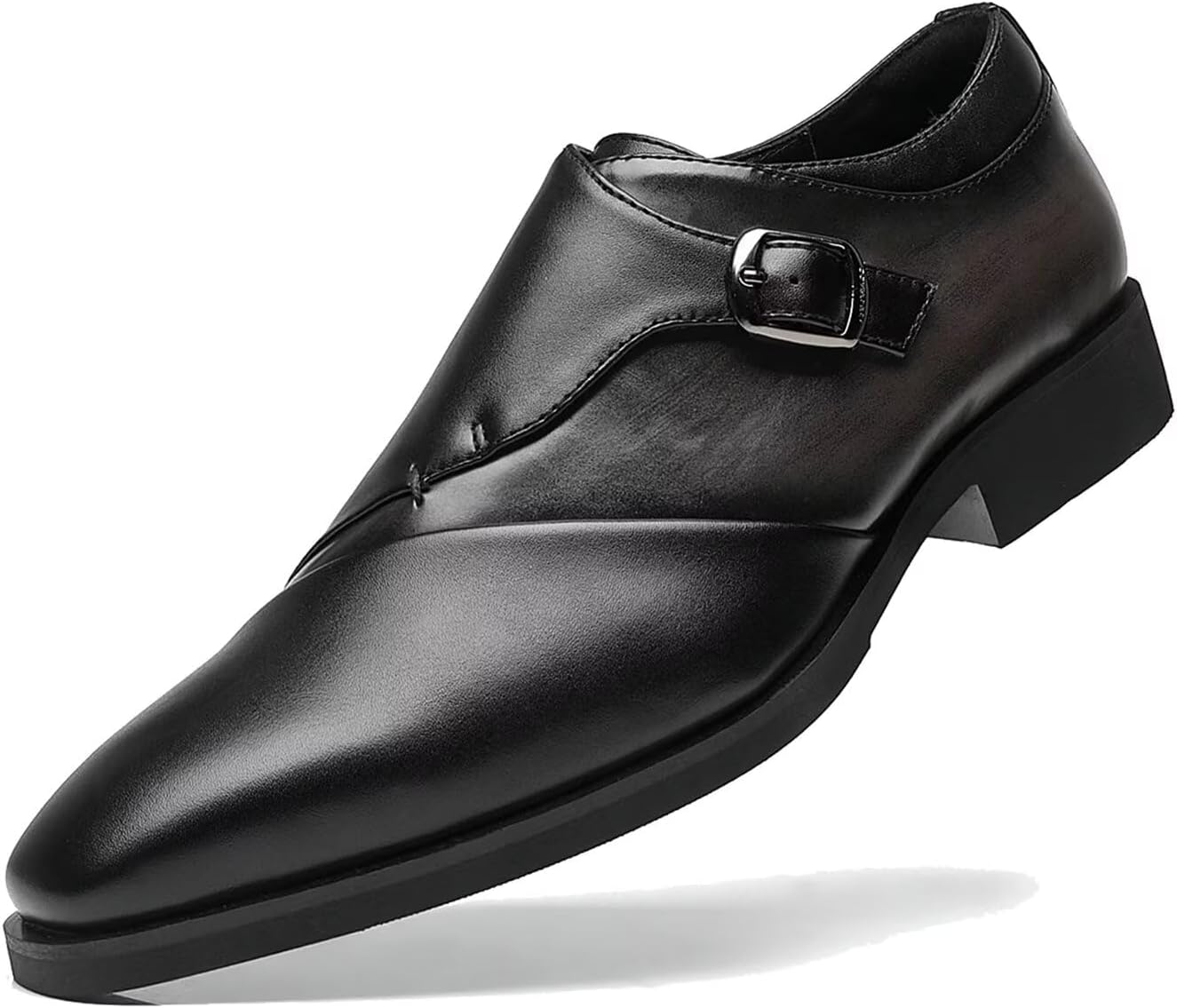
SANNAX · Black
SANNAX Single Monk-Strap Dress Loafer
A plain-toe single monk strap with one adjustable buckle and a dress-oriented low profile.

Florsheim · Black
Florsheim Ruvo Double Monk Oxford
A cap-toe double monk with two buckles, Suedetec lining, and a removable cushioned footbed.
QUICK ANSWERS
Questions shoppers ask next.
How should I choose between one buckle and two?
Check the dress code and how much visual detail the wardrobe can support. Single monks are quieter and easier with business tailoring; double monks make a stronger style statement.
Why does instep fit matter more than buckle count?
Buying for buckle count before checking instep fit. Monk straps have fewer adjustment points than laces, so the last and strap reach must suit the foot.
How can I judge the visual impact of the buckles?
Wear each pair with a complete outfit and view it in a full-length mirror. If the hardware pulls attention away from the tailoring, the single monk or a lace-up is the more useful choice.
What offers similar versatility without hardware?
Compare a plain-toe Derby. It offers greater lacing adjustment and similar suit-to-smart-casual range without visible hardware.