Quick answer: An Oxford’s eyelet tabs are stitched beneath the vamp, so the opening closes into a neat V when the shoe is laced. On a Derby, the eyelet pieces lie above the front panel and open more freely around the instep. That construction detail explains much of the visual and fitting difference: Oxfords look cleaner and more contained, while Derbies look slightly broader and more relaxed.
Closed lacing and open lacing: the structural difference
An Oxford’s eyelet tabs are stitched beneath the vamp, so the opening closes into a neat V when the shoe is laced. On a Derby, the eyelet pieces lie above the front panel and open more freely around the instep. That construction detail explains much of the visual and fitting difference: Oxfords look cleaner and more contained, while Derbies look slightly broader and more relaxed.
Do not identify the styles by toe decoration. Either shoe can be plain toe, cap toe, or brogued. Look at the area carrying the eyelets. If those pieces are laid over the front of the shoe and open freely, it is a Derby; if they disappear beneath the vamp, it is an Oxford.
How instep volume changes the fit
Closed lacing gives an Oxford less room to accommodate a tall instep. If the facings remain widely separated or press into the top of the foot, going longer often creates heel slip without solving the pressure. A roomier last may help, but many high-volume feet fit more naturally in a Derby.
A low-volume foot can benefit from an Oxford because the facings draw the upper securely around the midfoot. Derby quarters offer more adjustment, yet they may overlap or still leave excess volume on a thin foot. Judge the gap, heel hold, and flex point together rather than treating width as the only fitting dimension.
Formality from black tie to denim
A slim black Oxford with minimal decoration is the more formal default for dark suits, conservative interviews, and evening tailoring. It still is not automatically a black-tie shoe; a tuxedo traditionally calls for a highly polished or patent formal style. Color, leather finish, sole thickness, and broguing can move any lace-up up or down the ladder.
Derbies are entirely appropriate with most business suits when the leather is smooth, the toe is restrained, and the sole is not bulky. Brown, suede, or heavily brogued Derbies transition especially well to chinos and dark denim. The open lacing does not make a Derby casual—it simply gives it a lower formal ceiling than the sleekest Oxford.
Which style should be your first pair?
Choose an Oxford first if your calendar centers on suits, interviews, ceremonies, or a conservative office and your instep fits comfortably. A dark brown or black cap toe covers a wide range without looking theatrical. The Clarks Tilden Cap is a useful example of the familiar cap-toe route, but its exact width and variation still need to suit the wearer.
Choose a Derby first when fit adjustment, business-casual clothing, or long workdays matter more than maximum formality. A plain-toe model such as the ECCO London or a restrained Rockport can work with tailoring while remaining easy with chinos. The best first pair is the one that serves the most frequent dress code without asking the foot to tolerate pressure.
Oxford and Derby outfit examples
For a charcoal suit and formal meeting, use a polished black cap-toe Oxford, charcoal socks, and a black belt. With a navy suit at a daytime wedding, a dark-brown Oxford or refined Derby both work; let the Derby’s sole stay slim and keep decoration moderate. A medium-brown Derby is a natural partner for gray flannel trousers and a navy sport coat.
With dark denim, a suede or textured Derby usually looks more coherent than a glossy black Oxford. For travel, a plain-toe Derby with a flexible rubber sole can cover meetings and dinner without seeming like a sneaker. Outfit success depends on matching visual weight: delicate tailoring wants a cleaner shoe, while textured cloth can support more substantial leather and broguing.
Mistakes that make either style look wrong
The most common Oxford mistake is forcing closed lacing over a high instep until the facings bow and the vamp creases under tension. The common Derby mistake is assuming every open-laced shoe is informal; a polished black Derby can look sharper than a cheap, square-toed Oxford with a thick synthetic sole.
Avoid buying by style name alone. Check the exact toe shape, upper material, outsole, and selected color because Amazon variations can change the impression considerably. Walk indoors with dress socks, make sure the ball of the foot meets the flex point, and reject concentrated pressure rather than counting on a painful break-in.
CURRENT AMAZON OPTIONS
Compare each represented side on Amazon.
As an Amazon Associate, we earn from qualifying purchases. Amazon links open the exact listing so you can confirm current size, color, price, and availability.

Clarks · Dark tan leather
Clarks Tilden Cap Oxford
A classic cap-toe lace-up offered by Amazon in regular and wide sizing.

Rockport · Black
Rockport Margin Oxford
A practical plain-toe option for shoppers who prioritize familiar fit and subdued styling.
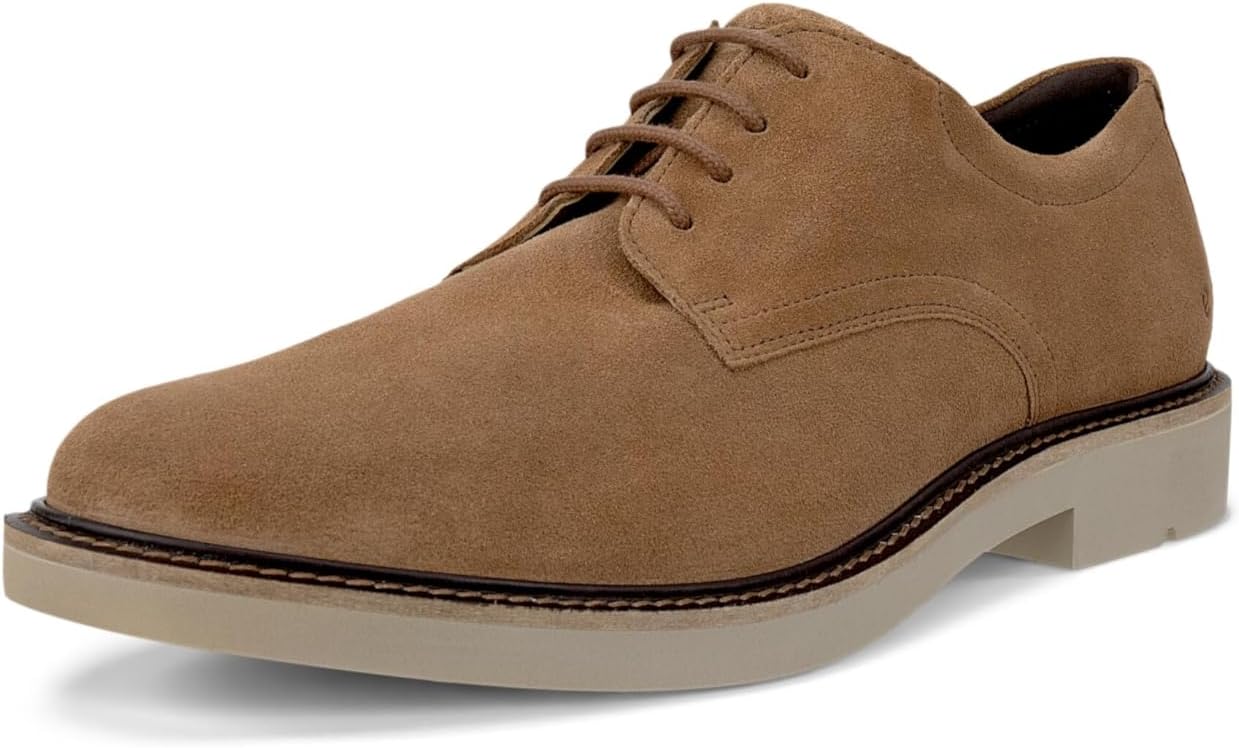
ECCO · Black
ECCO London Plain-Toe Derby
A round-toe derby profile with a removable dual-fit insole on the Amazon listing.
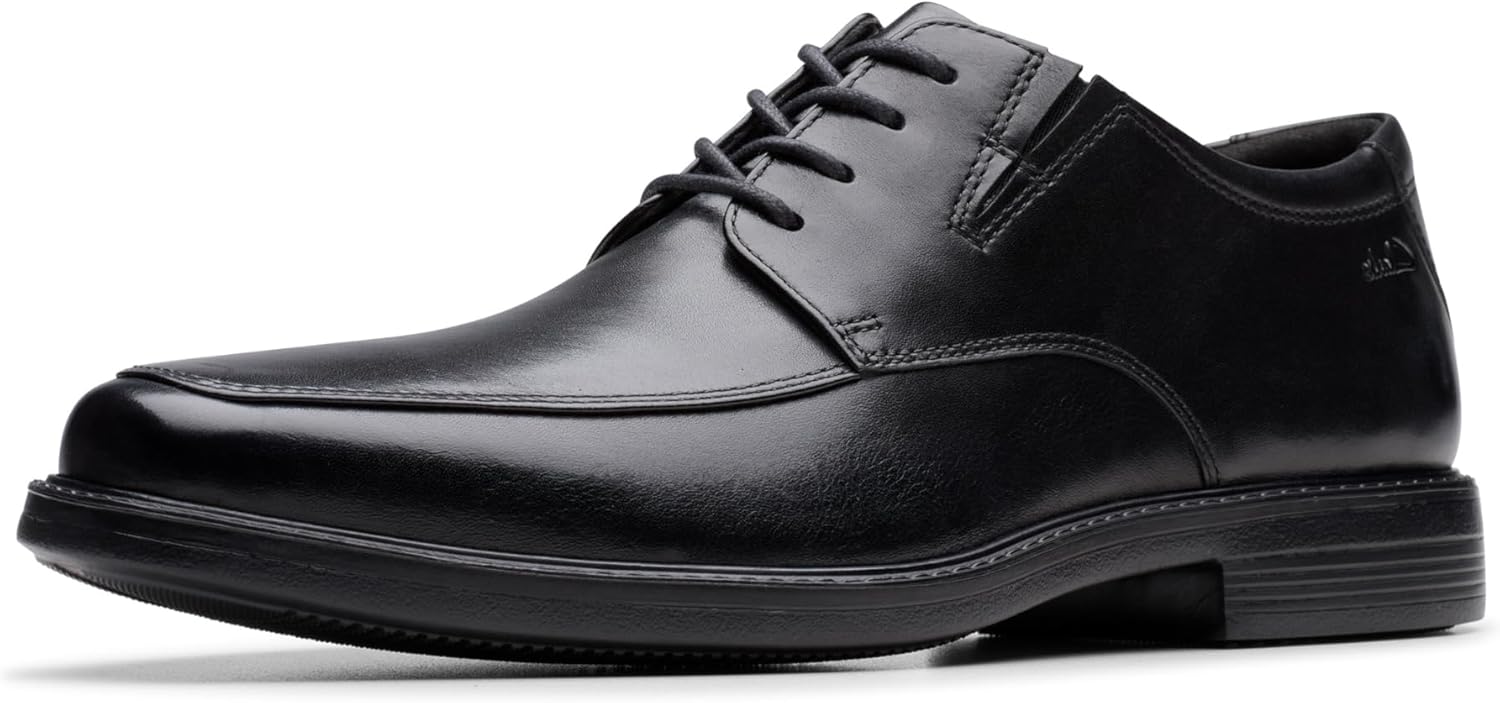
Clarks · Black leather
Clarks Cosgrove Apron Oxford
Amazon describes a premium leather upper, softly squared toe and lightweight impact-absorbing EVA sole.
QUICK ANSWERS
Questions shoppers ask next.
Are Oxfords always more formal than Derbies?
Oxfords generally have the higher formal ceiling because closed lacing produces a cleaner front. A sleek black Derby can still be more formal than a casual suede or heavily brogued Oxford, so color, finish, toe detail, and sole profile must be considered.
Are Derby shoes better for wide feet?
Often, but not automatically. Open quarters give the instep more adjustment and many wide feet find that helpful. Actual ball width, toe shape, heel fit, and the brand’s last remain more important than the Derby label.
Can you wear Derby shoes with a suit?
Yes. Choose smooth leather, a restrained toe, and a relatively slim sole. Black or dark-brown Derbies work with most business suits; very chunky, suede, or heavily brogued pairs belong closer to smart casual.
Should a first dress shoe be an Oxford or Derby?
Buy an Oxford when formal suits dominate and the closed-lace fit suits your instep. Buy a Derby when you need more adjustment and expect to alternate between tailoring and business casual. Frequency and fit should break the tie.