Quick answer: A loafer relies on its vamp and heel shape to hold the foot because there are no laces to recover extra volume. That makes the initial fit unusually important: a loose loafer rarely becomes more secure with wear. Penny, tassel, and bit details change the mood, but all loafers need a stable heel and enough vamp contact to resist sliding.
Slip-on structure versus closed-lace control
A loafer relies on its vamp and heel shape to hold the foot because there are no laces to recover extra volume. That makes the initial fit unusually important: a loose loafer rarely becomes more secure with wear. Penny, tassel, and bit details change the mood, but all loafers need a stable heel and enough vamp contact to resist sliding.
An Oxford wraps the midfoot with closed lacing and allows small tension adjustments through the eyelets. Its cleaner front also creates a straighter line beneath tailored trousers. The tradeoff is less accommodation for a high instep, while a well-shaped loafer may feel easier there if the vamp depth is right.
Suits, offices, weddings, and travel
For conservative offices, interviews, funerals, and formal ceremonies, a black or dark-brown Oxford is the safer choice. Loafers can work with suits when the suit is not overly formal and the loafer is sleek, leather-soled or otherwise refined. Tassels add heritage character; chunky driving soles and casual moccasin details lower the dress level.
Travel changes the balance. A secure loafer is convenient at airports and moves easily from chinos to an unstructured suit, while an Oxford gives a stronger presentation for client meetings. If only one pair is packed, choose based on the most formal appointment and verify that the outsole can handle the expected walking.
Socks and no-show socks
Oxfords worn with tailoring normally call for over-the-calf or dress socks that connect the trouser to the shoe. A bare ankle interrupts that line and looks accidental in a formal setting. Sock color does not have to copy the shoe; matching or harmonizing with the trouser usually lengthens the leg visually.
Loafers allow more flexibility. With a suit or office trousers, visible dress socks remain the polished option. No-show socks can work with cropped chinos, linen trousers, or summer separates, but truly bare feet invite friction, moisture, and odor. Confirm the no-show liner does not raise the heel enough to cause slipping.
Heel hold, instep fit, and break-in
A new loafer may show a trace of heel movement before the sole flexes, but the foot should not lift dramatically or slide forward. The widest part of the foot must align with the widest part of the shoe. If the vamp bites across the instep or toes grip to keep the shoe on, the last is wrong.
An Oxford can be tuned with lacing, yet laces cannot correct excess length or a misplaced flex point. Watch the facing gap: a very wide V can signal too much instep pressure, while fully closed facings with looseness may signal too much volume. Test both styles late in the day with the socks planned for actual wear.
Seasonality and trouser break
Loafers feel most natural in spring and summer because their low opening and slip-on shape complement lighter cloth and shorter trouser breaks. Suede and mid-brown leather suit daytime outfits particularly well. They also work year-round indoors, provided the color and sole match the weight of the clothing.
Oxfords handle all seasons and look best when the trouser reaches the shoe with a clean slight break or no break. Very narrow cropped trousers can make a traditional Oxford look long, while a heavy trouser pooling over a loafer hides its defining line. Proportion matters as much as the calendar.
A practical two-pair wardrobe
Start with a black or dark-brown cap-toe Oxford for interviews, ceremonies, and the most formal workdays. Add a brown or burgundy loafer for business casual, travel, dinners, and warm-weather tailoring. That pairing covers more situations than buying two nearly identical lace-ups.
If suits are rare, reverse the order: begin with a versatile leather loafer, then add an Oxford when a specific formal need appears. Compare the Cole Haan Pinch Tassel and Clarks Escalade as different loafer directions, but check heel shape, material, and selected variation rather than assuming every slip-on fits alike.
CURRENT AMAZON OPTIONS
Compare each represented side on Amazon.
As an Amazon Associate, we earn from qualifying purchases. Amazon links open the exact listing so you can confirm current size, color, price, and availability.

Cole Haan · Burgundy
Cole Haan Pinch Tassel Loafer
A heritage tassel shape that brings personality to navy, gray, and cream trousers.

Clarks · Black
Clarks Escalade Step
A restrained slip-on profile with a cushioned, work-ready direction.

Clarks · Dark tan leather
Clarks Tilden Cap Oxford
A classic cap-toe lace-up offered by Amazon in regular and wide sizing.
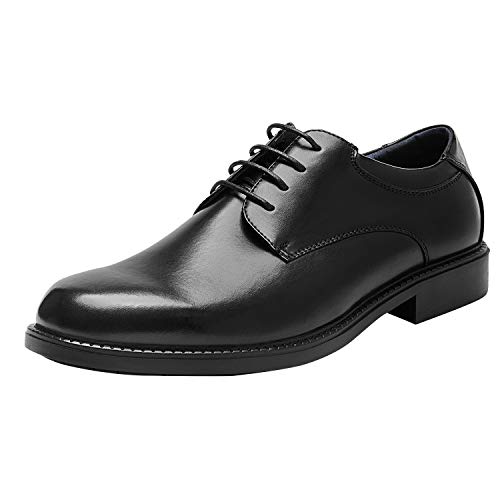
Bruno Marc · Black
Bruno Marc Men's Business Derby Lace-Up Shoes
Classic open-lacing derby with a cushioned latex insole and TPR outsole.
QUICK ANSWERS
Questions shoppers ask next.
Are loafers less formal than Oxfords?
Usually. Oxfords have closed lacing and a cleaner formal line. A sleek black leather loafer can still work with many suits, while casual suede, driving, or chunky loafers sit lower on the dress scale.
Can loafers replace Oxfords at work?
In business-casual and many modern professional offices, yes. A conservative law, finance, or ceremonial setting may still favor lace-up Oxfords. Follow the most formal recurring requirement, not the most relaxed day.
Can men wear loafers with a wedding suit?
Yes for many daytime, summer, destination, and cocktail weddings. Choose a refined leather pair, wear proper socks unless the outfit is intentionally warm-weather casual, and avoid loafers when the invitation is black tie.
Which style is more comfortable for travel?
A secure, cushioned loafer wins for easy removal and adaptable outfits; a flexible Oxford may fit better and look more authoritative at meetings. Comfort depends on heel hold, flex point, width, and walking surface rather than closure alone.