Quick answer: Smooth leather soles can become slippery on wet tile, painted concrete, metal covers, and polished stone, especially before the surface is scuffed through ordinary wear. Rubber usually offers more dependable wet grip, but compound and tread design still matter. A hard, nearly smooth rubber sole is not automatically slip resistant.
Wet traction and surface conditions
Smooth leather soles can become slippery on wet tile, painted concrete, metal covers, and polished stone, especially before the surface is scuffed through ordinary wear. Rubber usually offers more dependable wet grip, but compound and tread design still matter. A hard, nearly smooth rubber sole is not automatically slip resistant.
Match the sole to the commute's worst regular surface rather than the dry office floor. Transit stairs, sloped sidewalks, snow, and restaurant tile each create different demands. No ordinary dress sole guarantees safety on ice, oil, or standing water.
Water absorption and edge exposure
Leather outsoles absorb moisture through the bottom and edges, which can soften fibers and accelerate wear if the shoe is repeatedly saturated. A welt can make the path to the interior less direct but does not make the shoe waterproof. Stitching and upper openings remain vulnerable.
Rubber blocks water at the ground-contact surface more effectively, though moisture can still enter around seams, the welt, the tongue, and the upper. Cemented edges can also weaken after repeated soaking. Dry either construction fully between wears and inspect the perimeter after severe exposure.
Flexibility and underfoot feel
Leather soles often begin firm and develop a flex pattern with wear, providing a thin, direct connection to the floor. Some wearers value their balance and sound indoors. On cold wet pavement, the same thinness can feel less insulated and transmit more surface harshness.
Rubber ranges from thin dress compounds to thick lugged units. It can add cushioning, grip, and weather separation but may also add weight or stiffness. Compare actual sole geometry and flex location rather than treating every rubber bottom as a comfort sole.
Formality and silhouette
A thin leather sole with a clean edge is the traditional formal benchmark because it supports a refined upper without visual bulk. Low-profile black or dark-brown rubber can look nearly as restrained from normal viewing distance. The difference matters less in many offices than upper style, toe ornament, and overall condition.
Thick lugs, contrast colors, and athletic sidewalls lower formality even when the upper resembles an Oxford. For suits, seek a discreet edge and proportionate heel. Weather suitability should not force a bright casual sole when subdued rubber options exist.
Topies, combination soles and overshoes
A cobbler can often add a thin rubber sole protector, sometimes called a topy, over part of a suitable leather sole. This improves grip and shields the high-wear forepart while preserving much of the original profile. The work should be done before the sole becomes too thin or water damaged.
Combination soles pair leather with rubber contact areas, while removable overshoes protect the entire shoe during severe commutes. Overshoes provide better upper and edge defense than sole material alone. Confirm fit so the cover does not abrade the leather or create unstable bulk.
Best choice by climate and commute
Dry climates and mostly indoor travel can justify leather soles for their formal line and familiar feel. Frequent rain, snow, salted sidewalks, or long transit walks generally favor low-profile rubber, combination soles, or weather overshoes. Rotation is important whenever a pair may not dry by the next morning.
Choose around the most common demanding condition, not a rare ideal day. A commuter can keep leather-soled shoes at the office and travel in protective footwear, but that plan requires storage and changing time. When one pair must do everything, discreet rubber is usually the more forgiving compromise.
CURRENT AMAZON OPTIONS
Compare each represented side on Amazon.
As an Amazon Associate, we earn from qualifying purchases. Amazon links open the exact listing so you can confirm current size, color, price, and availability.

Rockport · Black
Rockport Margin Oxford
A practical plain-toe option for shoppers who prioritize familiar fit and subdued styling.

Clarks · Brown
Clarks Jaxen Easy Chelsea Boot
An ankle-height alternative when a low shoe feels too light for the season.
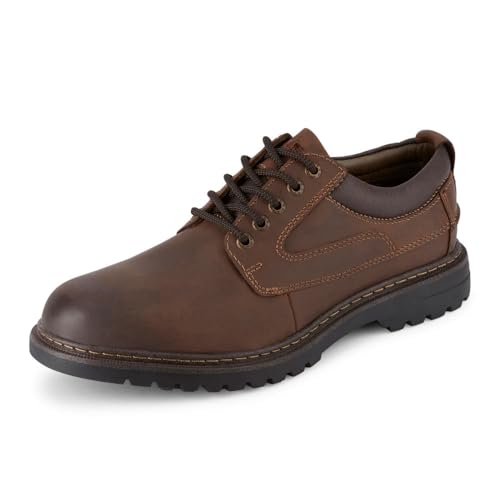
Dockers · Dark Tan
Dockers Warden Leather Oxford with Stain Defender
Leather oxford with multi-layer cushioning, rubber traction, and a stain-resistant finish.
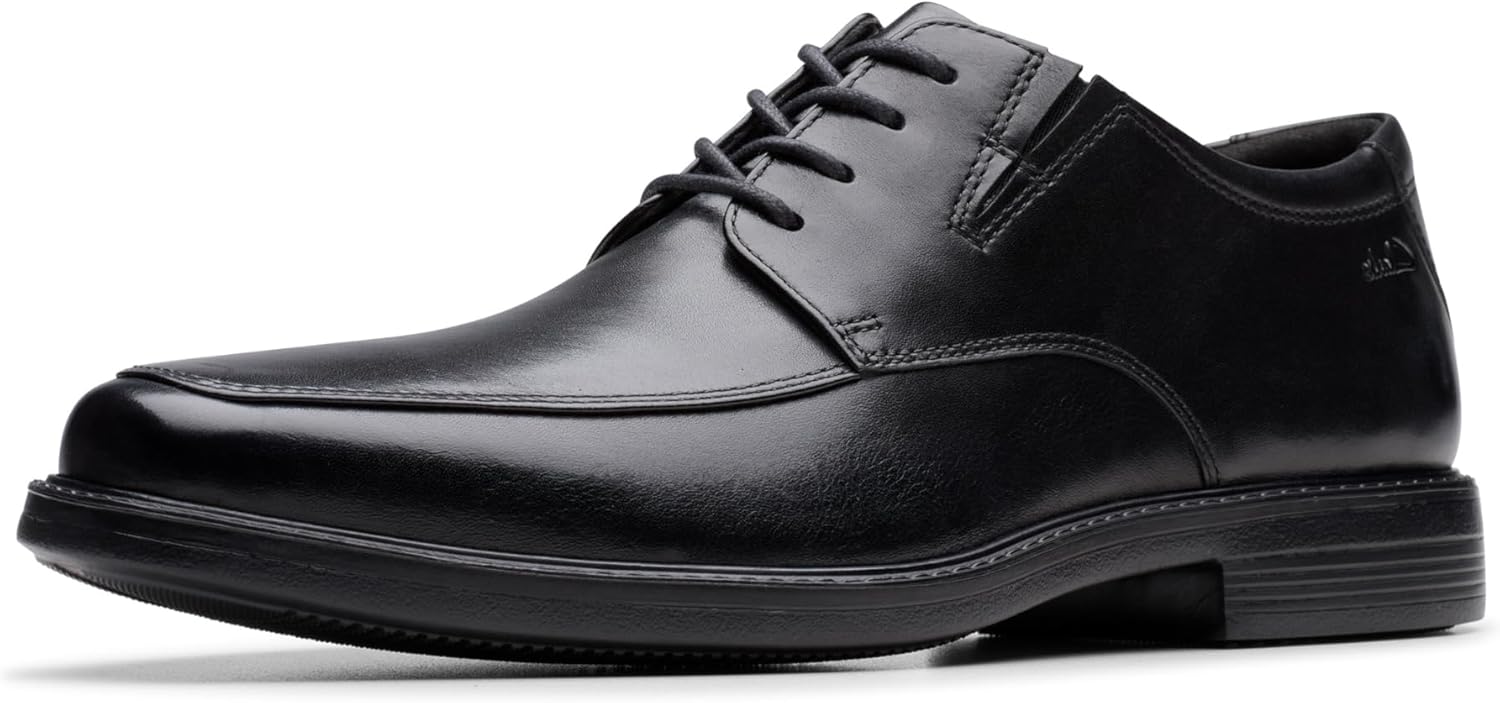
Clarks · Black leather
Clarks Cosgrove Apron Oxford
Amazon describes a premium leather upper, softly squared toe and lightweight impact-absorbing EVA sole.
QUICK ANSWERS
Questions shoppers ask next.
Are leather soles slippery in rain?
They can be, particularly when new or on smooth tile, metal, and polished stone. Wear texture may improve grip somewhat, but leather remains less predictable than suitable treaded rubber in wet conditions.
Do rubber soles make shoes less formal?
Not necessarily. Thin, dark, low-profile rubber can remain appropriate with business suits, while thick lugs, bright contrast, and athletic sidewalls clearly reduce formality.
Can a cobbler add rubber to leather soles?
Often, a cobbler can install a thin forepart protector on a sound leather sole. Suitability depends on remaining thickness, construction, condition, and the repairer's available materials.
What sole is best for winter dress shoes?
A stable rubber sole with useful tread is generally the practical choice for cold wet streets, though no dress sole guarantees ice grip. Overshoes add stronger protection for the upper, welt edge, and salt exposure.