Quick answer: Brush away dust, wipe appropriate smooth leathers and clean welt edges before putting shoes away. Dirt and salts left for months can stain finishes and attract moisture.
Clean and dry before storage
Brush away dust, wipe appropriate smooth leathers and clean welt edges before putting shoes away. Dirt and salts left for months can stain finishes and attract moisture.
Let the pair dry at room temperature after wear or cleaning. Never seal damp shoes in a box, because stagnant moisture creates conditions for odor, mildew and lining damage.
Conditioning timing
Inspect smooth leather after cleaning. If it feels dry, apply a thin compatible conditioner and allow it to absorb fully before storage; do not saturate leather merely because the storage period is long.
Suede, nubuck, patent and coated surfaces require different treatment. Confirm the material and use its specific care method rather than applying smooth-leather conditioner to every pair.
Shoe trees versus acid-free stuffing
Properly sized shoe trees support the vamp and help retain shape, but an oversized tree can stretch the upper or distort the heel. Insert them only after the shoes have aired.
Acid-free tissue is a lighter alternative for delicate or seldom-worn pairs. Shape it loosely through the toe and vamp; newspaper can transfer ink and retain unwanted moisture.
Breathable bags and box ventilation
A soft cloth bag protects against dust and abrasion while allowing some air exchange. Keep each shoe separate so buckles, heels and glossy coatings do not rub.
Boxes should be clean, dry and not airtight. Plastic bags are poor long-term containers because they trap humidity and can stick to coated finishes.
Humidity, heat and sunlight control
Choose a stable interior closet rather than an attic, garage or hot vehicle. Heat accelerates drying and adhesive failure, while high humidity encourages mold.
Direct sunlight can fade leather unevenly. In humid climates, improve room airflow and monitor moisture rather than placing unverified chemicals directly against the shoes.
Quarterly inspection routine
Every few months, open the containers, smell for mustiness and inspect seams, linings, soles and surface dryness. Early mildew is easier to address than a colony left for a year.
Air the shoes briefly and replace damp or compressed stuffing. If mold returns or penetrates the lining, isolate the pair and seek professional cleaning guidance.
CURRENT AMAZON OPTIONS
Use these as relevant comparison points.
As an Amazon Associate, we earn from qualifying purchases. Amazon links open the exact listing so you can confirm current size, color, price, and availability.

Cole Haan · Burgundy
Cole Haan Pinch Tassel Loafer
A heritage tassel shape that brings personality to navy, gray, and cream trousers.

Bruno Marc · Dark Brown
Bruno Marc Urban Suede Oxford
Soft texture lowers the formality while the lace-up shape keeps the outfit intentional.

Clarks · Brown
Clarks Jaxen Easy Chelsea Boot
An ankle-height alternative when a low shoe feels too light for the season.
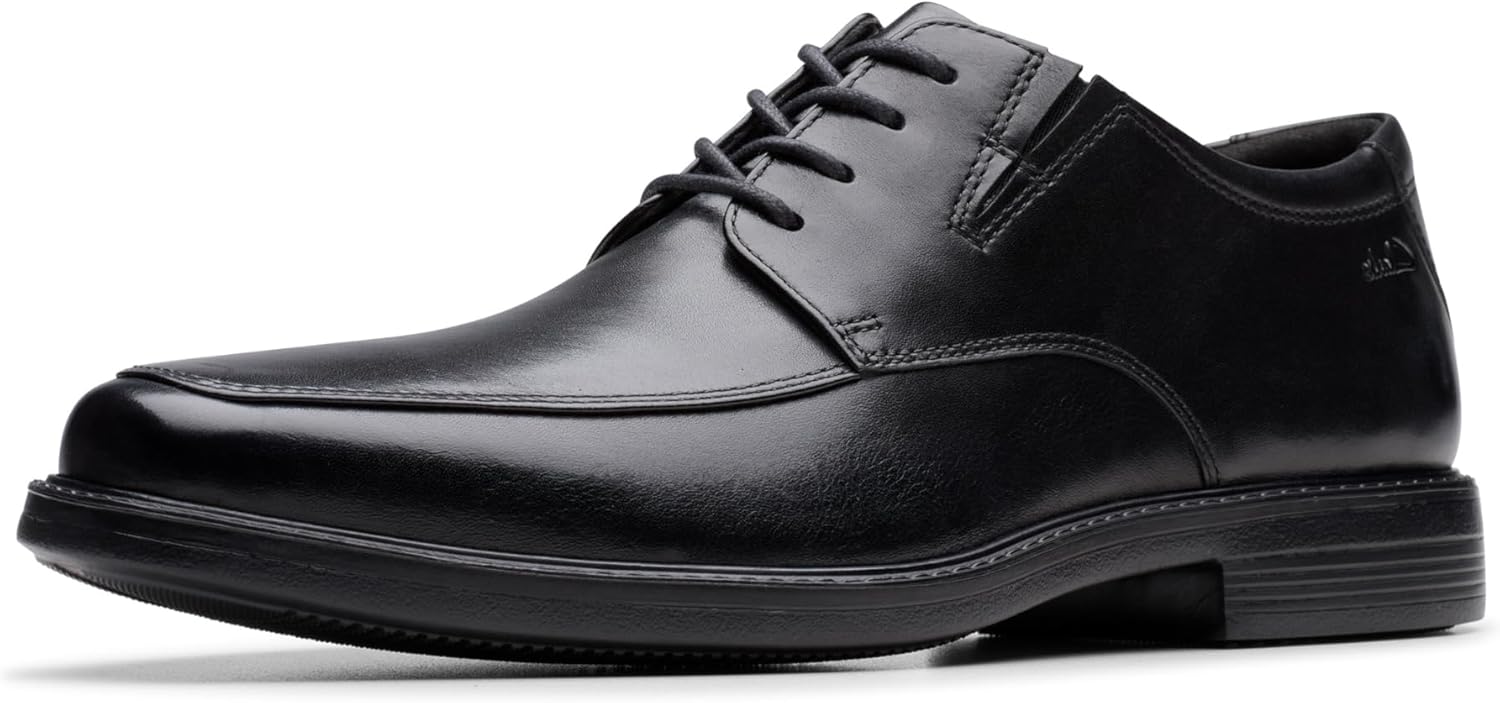
Clarks · Black leather
Clarks Cosgrove Apron Oxford
Amazon describes a premium leather upper, softly squared toe and lightweight impact-absorbing EVA sole.
QUICK ANSWERS
Questions shoppers ask next.
Should dress shoes be stored in boxes?
Boxes are useful when clean, dry and ventilated. Place shoes in separate breathable bags and avoid airtight plastic, damp basements and high-heat storage areas.
Can leather shoes grow mold in storage?
Yes. Residual moisture, poor airflow and high humidity can support mold on leather and linings. Clean and dry the shoes fully and inspect them periodically.
Should shoe trees remain in stored shoes?
Properly fitted trees can remain in smooth-leather shoes, but they must not stretch the upper. Acid-free tissue is a gentler alternative for delicate pairs.
How do you prevent leather from drying out?
Store it away from heat and sunlight, inspect periodically and condition smooth leather only when dryness appears. Overconditioning is not protection and can leave buildup.