Quick answer: A few millimeters of heel movement can be normal in a new dress shoe with a stiff sole. As the outsole begins to flex under the ball of the foot, it should pull less strongly against the heel. Movement should remain slight and should not create rubbing or instability.
The direct answer for How Much Heel Slip Is Normal in New Dress Shoes
A few millimeters of heel movement can be normal in a new dress shoe with a stiff sole. As the outsole begins to flex under the ball of the foot, it should pull less strongly against the heel. Movement should remain slight and should not create rubbing or instability.
If the heel rises noticeably on every step, the shoe feels as though it may come off, or the wearer grips with the toes, the slip is excessive. The likely causes are too much length, too much heel volume, a flex point in the wrong place, or a last that does not match the foot.
How last shape changes the decision
Heels differ in width, curve, and volume, just as shoe lasts do. A model can fit correctly across the forefoot yet leave a narrow heel swimming. Another last in the same printed size may hold better without reducing toe room.
Notice whether the collar follows the back of the foot or leaves gaps at the sides. Heel pads may fine-tune a small volume difference, but they should not be the first response to obvious excess length or a fundamentally straight heel cup.
How counter stiffness changes the decision
A firm heel counter initially resists the foot and can exaggerate slight movement. With appropriate wear it may soften around the heel and become more conforming. That change is gradual and should occur without blisters.
A counter that collapses, folds inward, or misses the heel's contour can rub regardless of softness. Check that it stands evenly on both shoes and does not press sharply against the Achilles tendon. Structural defects warrant a return, not a break-in experiment.
How flex point changes the decision
When the sole bends beneath the ball of the foot, the shoe moves with the stride and places less leverage on the heel. If it bends too far forward or behind, the stiff forepart acts like a lever and lifts the shoe at the back.
Watch the upper while taking normal steps. The main crease should align with the toe joints, and the shoe should not bow dramatically through the arch. A badly located flex point usually requires a different length or last.
How and sizing errors changes the decision
Sizing down is not an automatic cure. A shorter shoe may stop heel lift while crushing the toes or moving the ball behind the widest part. Likewise, a narrow width can squeeze the forefoot without improving a high-volume heel cup.
Compare length, width, and volume separately. Relace the shoe fully, use the intended socks, and test an alternate width or last when available. A secure heel should coexist with free toes and correct ball alignment.
Common mistakes to avoid with How Much Heel Slip Is Normal in New Dress Shoes
Over-tightening the top eyelets is the most common mistake. It can cut into the instep and pull the foot backward without correcting excess space. Thick socks and adhesive pads can similarly mask a poor fit during a short try-on.
Do not wear the shoes outdoors hoping major slip will disappear. Test on a clean indoor surface until the difference between sole stiffness and sizing error is clear. Protect the return option if the heel continues to lift.
A practical before-you-buy checklist
Check the collar gap, heel rise, flex location, forefoot width, and instep pressure. Walk at normal speed, turn, and use stairs if the return rules permit. Repeat the test later in the day with the intended socks.
Accept only slight, non-irritating movement that appears tied to a stiff new sole. Compare another size or model when lift is large, asymmetrical, or accompanied by toe gripping. Do not sacrifice the forefoot to lock the heel.
CURRENT AMAZON OPTIONS
Use these as relevant comparison points.
As an Amazon Associate, we earn from qualifying purchases. Amazon links open the exact listing so you can confirm current size, color, price, and availability.
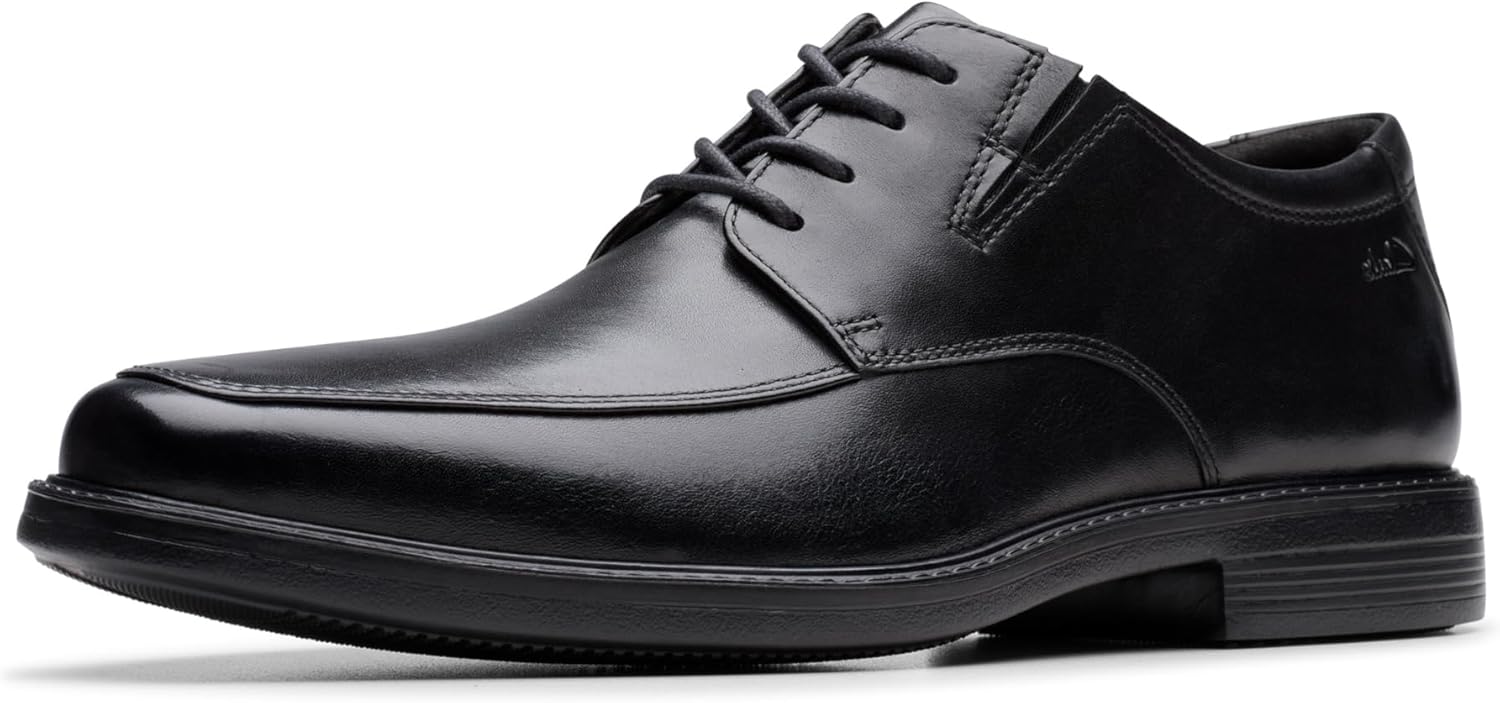
Clarks · Black leather
Clarks Cosgrove Apron Oxford
Amazon describes a premium leather upper, softly squared toe and lightweight impact-absorbing EVA sole.

Clarks · Black leather
Clarks Eastridge Low Oxford
Amazon lists a premium leather upper, stitch-down construction, lace closure, soft foam footbed, and lightweight EVA outsole.

Clarks · Dark tan leather
Clarks Tilden Cap Oxford
A classic cap-toe lace-up offered by Amazon in regular and wide sizing.

Deer Stags · Black
Deer Stags Crown Work Dress Oxford
Work-ready dress oxford with memory foam, slip resistance, and a nonmetallic shank.
QUICK ANSWERS
Questions shoppers ask next.
What is the first thing to check for how much heel slip is normal in new dress shoes?
Watch whether the sole flexes at the ball of the foot. Slight heel movement from a stiff sole may improve; large lift combined with a misplaced flex point usually indicates the wrong size or last.
Which common mistake changes the How Much Heel Slip Is Normal in New Dress Shoes decision most often?
Sizing down without checking the forefoot is the common error. It may reduce heel movement while crowding toes and shifting the ball of the foot behind the shoe's widest point.
How can you confirm last shape for “How Much Heel Slip Is Normal in New Dress Shoes” before the return window closes?
Walk indoors and examine gaps around the heel collar while confirming the toes and ball fit correctly. Compare a second model or width; a better last will hold the heel without needing painful lace tension.
What nearby fit choice should you compare while deciding “How Much Heel Slip Is Normal in New Dress Shoes”?
Compare a different last with a narrower heel and similar forefoot width. That change is often more effective than reducing the shoe's length.