Quick answer: Slush carries dissolved salts into the leather and along seams. As the moisture evaporates, mineral residue remains at the drying boundary and forms a pale ring. Repeated wetting can draw more residue outward, which is why wiping only the visible line may cause it to reappear.
Why road salt leaves rings
Slush carries dissolved salts into the leather and along seams. As the moisture evaporates, mineral residue remains at the drying boundary and forms a pale ring. Repeated wetting can draw more residue outward, which is why wiping only the visible line may cause it to reappear.
Salt is not merely cosmetic. It can pull moisture from leather, stiffen fibers, and encourage cracking when left in place. Early, gentle treatment is safer than aggressive scrubbing after several cycles, but the exact care method should match the confirmed smooth-leather finish.
Dry brushing before liquid treatment
Let surface slush drain, remove the laces, and brush away dry grit with a soft shoe brush. Grit can scratch the finish when rubbed under a wet cloth. Work over the welt and seams carefully because crystals collect in those edges.
Do not scrape the ring with a hard tool or stiff household brush. If the shoe is still saturated, blot it and begin controlled drying before adding more liquid. The objective is to remove loose contamination while preserving the finish for a mild, even treatment.
Diluted treatment and patch testing
For suitable smooth leather, a lightly damp cloth and a mild diluted white-vinegar solution can help dissolve remaining salt. Begin with a hidden-area patch test because finishes and dyes react differently. Apply sparingly over a broader area around the ring rather than soaking one sharp edge.
Blot and wipe with controlled passes, using clean sections of cloth so residue is not spread back onto the upper. Stop if color transfers heavily, the surface becomes tacky, or the finish changes. Suede, patent, exotic, and specialty-coated materials require their own manufacturer-approved process.
Even drying away from heat
After treatment, shape the shoe gently and allow it to dry at room temperature with moving air around it. Use plain absorbent paper inside and replace it when damp. Even drying reduces the chance of a new tide mark forming at the edge of a saturated patch.
Keep the pair away from radiators, heating vents, hair dryers, and direct intense sun. Rapid heat can shrink or harden leather and weaken adhesives. Drying may take a full day or longer, and additional treatment should wait until the material is no longer cool or damp inside.
Conditioning after salt removal
Once the shoe is completely dry and the residue is gone, apply a small amount of conditioner suitable for the confirmed leather. Salt and cleaning can leave the surface depleted, but over-conditioning may darken the upper or soften structure. Test first and use thin, even coverage.
Allow conditioner to absorb, brush the leather, and restore color with compatible cream polish if needed. Wax can protect high-contact toe and heel areas but should not be piled over active creases. A remaining white line may need another mild cleaning cycle before polish, not a thick layer hiding it.
Winter prevention routine
Apply a material-appropriate protector before winter exposure and refresh it according to instructions. Wipe salt and slush soon after arriving indoors instead of letting repeated layers dry. A rubber overshoe or weather-specific boot is more reliable when streets are heavily treated.
Rotate pairs so damp shoes can dry fully, and keep a soft cloth and brush near the entrance. Inspect welt edges and sole seams after severe exposure. Prevention cannot make ordinary leather waterproof, but it reduces the duration and concentration of salt contact.
CURRENT AMAZON OPTIONS
Use these as relevant comparison points.
As an Amazon Associate, we earn from qualifying purchases. Amazon links open the exact listing so you can confirm current size, color, price, and availability.

Clarks · Brown
Clarks Jaxen Easy Chelsea Boot
An ankle-height alternative when a low shoe feels too light for the season.

Clarks · Dark tan leather
Clarks Tilden Cap Oxford
A classic cap-toe lace-up offered by Amazon in regular and wide sizing.

Rockport · Black
Rockport Margin Oxford
A practical plain-toe option for shoppers who prioritize familiar fit and subdued styling.
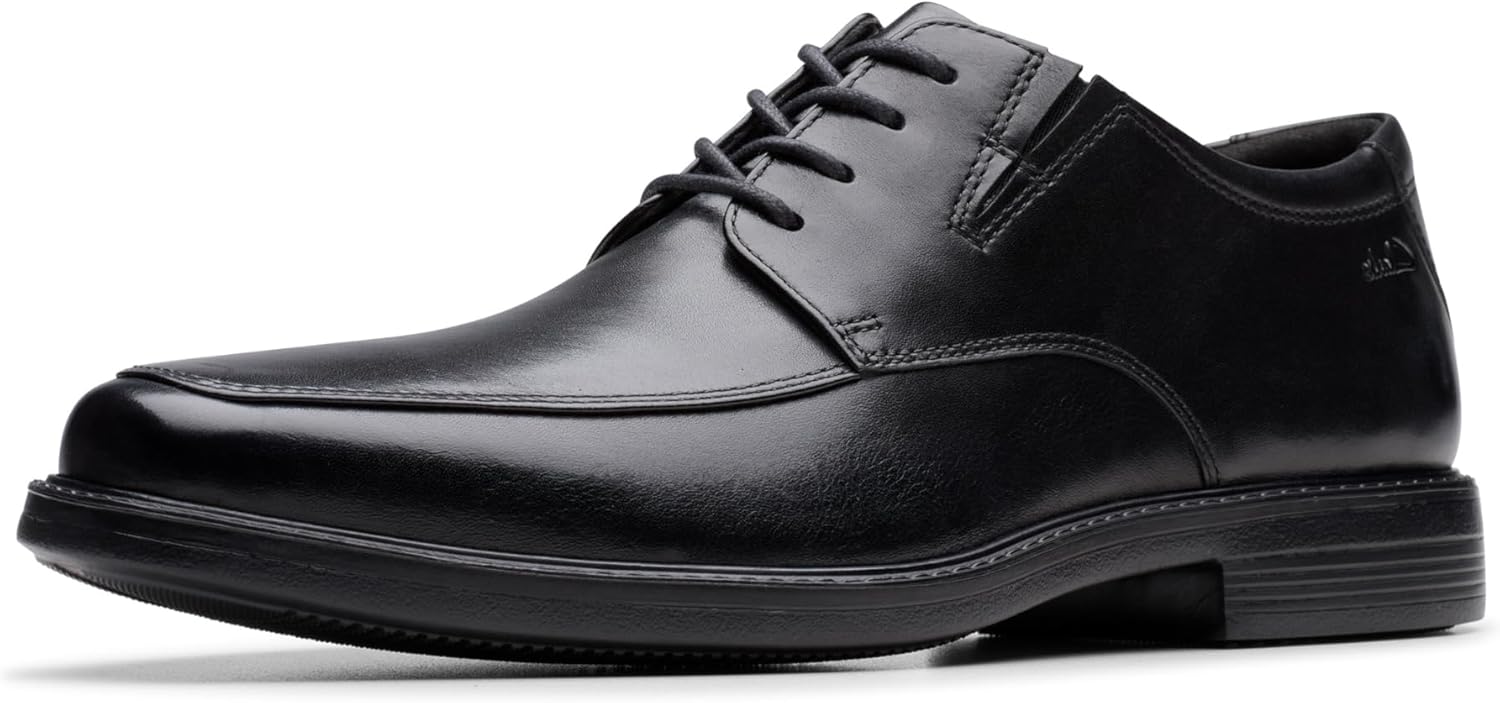
Clarks · Black leather
Clarks Cosgrove Apron Oxford
Amazon describes a premium leather upper, softly squared toe and lightweight impact-absorbing EVA sole.
QUICK ANSWERS
Questions shoppers ask next.
Does road salt permanently damage leather shoes?
It can stiffen, discolor, and eventually crack leather when residue remains or exposure repeats. Prompt gentle removal, slow drying, and appropriate conditioning improve the chance of recovery.
Can vinegar remove salt stains from leather?
A mild diluted white-vinegar solution can dissolve salt on many smooth leathers, but it should be patch tested and used sparingly. Specialty, suede, patent, or coated finishes may require a different product.
Should leather be conditioned after salt removal?
Yes, once the shoe is completely dry and the salt is removed, a small amount of compatible conditioner can restore lost suppleness. Excess conditioner may darken or over-soften the leather.
How do you prevent winter salt stains?
Use an appropriate protector, wipe slush promptly, rotate shoes, and avoid wearing delicate dress shoes in severe treated-street conditions. Overshoes provide stronger physical protection than topical products alone.