Quick answer: Confirm that the upper is smooth, polishable leather before opening a jar. Suede, nubuck, patent leather, corrected-grain coatings, and synthetic uppers require different care. Check the exact model description and test any uncertain product in a hidden area.
Identify leather finish before applying product
Confirm that the upper is smooth, polishable leather before opening a jar. Suede, nubuck, patent leather, corrected-grain coatings, and synthetic uppers require different care. Check the exact model description and test any uncertain product in a hidden area.
Smooth calf generally accepts conditioner and cream polish, while high-shine coated leather may not absorb them evenly. Using the wrong treatment can darken color, flatten texture, or leave a cloudy film that is harder to remove than the original scuff.
Brush, wipe and condition sequence
Remove the laces, insert shoe trees, and brush away grit with a clean horsehair brush. Wipe stubborn surface dirt with a barely damp cloth and allow the leather to dry. Polishing over dust grinds particles into the finish and creates uneven patches.
Condition only when the leather feels dry or the care schedule calls for it. Apply a small amount with a soft cloth, spread it thinly, and let it absorb before buffing. Excess conditioner can leave the upper greasy and may soften areas that need structure.
Thin cream-polish application
Use a small daub of cream polish and work it over one section at a time in light circular motions. Thin coats distribute pigment and wax evenly; a thick coat dries irregularly and collects around seams and broguing.
Choose a shade close to the leather or slightly darker only when a deliberate deepening is acceptable. Keep separate applicators for black, brown, and burgundy. Several restrained sessions are safer than trying to change the color in one pass.
Building toe shine without clogging flex points
A higher shine can be built with tiny amounts of wax on the rigid toe and, when appropriate, the heel. Alternate a whisper-thin film of wax with a drop of water, using gentle circles and allowing each layer to settle.
Avoid heavy wax across the vamp where the shoe bends. Rigid buildup at flex points cracks into pale lines and can trap dirt. The center of the shoe should remain nourished and softly polished rather than mirror-coated.
Drying and final brushing
Allow cream polish to haze according to its instructions, commonly for several minutes, before brushing briskly with a clean horsehair brush. Long, light strokes create heat and level the finish without stripping all the product.
Finish with a soft cloth over the toe and edges, then inspect the pair under even light. If streaks remain, brush longer before adding more polish. Replace the laces only after the surface is dry to the touch.
Color matching and patch testing
Test on the inner heel or tongue because polish can shift color, especially on light tan and hand-finished leather. Neutral polish adds shine without deliberate pigment, but it can still leave residue in perforations or alter pale surfaces.
For two-tone, burnished, or antique finishes, treat each color carefully and avoid spreading dark pigment over lighter panels. When the finish is valuable or unfamiliar, professional cleaning is safer than an aggressive home correction.
CURRENT AMAZON OPTIONS
Use these as relevant comparison points.
As an Amazon Associate, we earn from qualifying purchases. Amazon links open the exact listing so you can confirm current size, color, price, and availability.

Clarks · Dark tan leather
Clarks Tilden Cap Oxford
A classic cap-toe lace-up offered by Amazon in regular and wide sizing.

Stacy Adams · Black
Stacy Adams Dickinson Cap-Toe Oxford
A traditional cap-toe Oxford with a clean, formal profile and practical budget positioning.

Florsheim · Cognac
Florsheim Medfield Wingtip Oxford
Decorative broguing and a warm cognac finish make this Medfield variant suitable for navy and mid-gray tailoring.
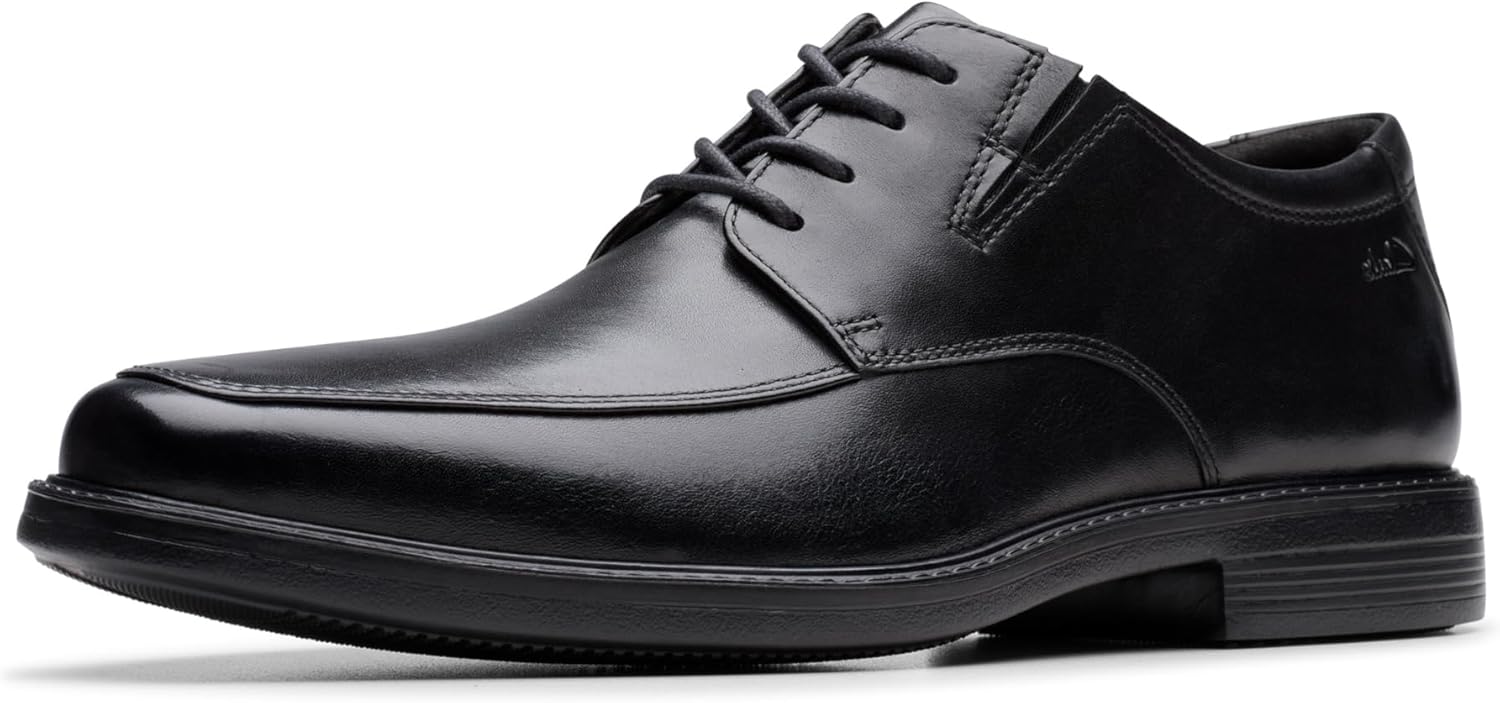
Clarks · Black leather
Clarks Cosgrove Apron Oxford
Amazon describes a premium leather upper, softly squared toe and lightweight impact-absorbing EVA sole.
QUICK ANSWERS
Questions shoppers ask next.
Should you condition shoes before polishing?
Condition first when smooth leather is dry or due for care, then let the product absorb and buff away residue before polishing. Conditioning every time is unnecessary and can over-soften or darken leather.
Why does shoe polish look streaky?
Streaks usually come from dirt left on the surface, too much product, uneven drying, or insufficient brushing. Stop adding polish and brush thoroughly; if needed, wipe gently and restart with a thinner coat.
How long should polish dry before brushing?
Follow the product label; many cream polishes need only several minutes to haze. Thick coats take longer and often buff poorly, which is another reason to apply very little.
Can neutral polish be used on every color?
No. Neutral polish avoids colored pigment but may leave pale residue in seams, alter very light leather, or react poorly with coated and textured finishes. Patch test first and never use it on suede or nubuck.