Quick answer: Use two sheets of paper larger than the feet, a thin pen or pencil, a rigid ruler, and a flexible tape for circumference. A wall provides a reliable heel reference. Wear the socks normally paired with dress shoes because their thickness changes usable volume.
Tools and socks needed
Use two sheets of paper larger than the feet, a thin pen or pencil, a rigid ruler, and a flexible tape for circumference. A wall provides a reliable heel reference. Wear the socks normally paired with dress shoes because their thickness changes usable volume.
Measure on a hard, level floor rather than carpet. If possible, ask another person to mark the feet while you stand naturally. Bending forward to trace your own foot can shift weight and change the outline.
Standing length measurement
Place the paper against a wall, stand with the heel lightly touching it, and distribute weight across both feet. Mark the tip of the longest toe, which is not always the big toe. Measure straight from the wall edge to that mark.
Repeat each foot twice and record the longer reliable result. Do not draw a thick outline around the whole foot and then measure its outer edge; the pen angle can add several millimeters. A vertical toe mark is easier to reproduce.
Ball-width and circumference checks
Mark the widest points at the big-toe and little-toe joints, then measure the straight distance between them. Use the flexible tape around the same ball area to record circumference. Width and girth together reveal whether the foot is broad, high-volume, or both.
Keep the tape snug without compressing the skin. A flat width alone cannot describe a prominent instep or a thick forefoot, which is why two people with the same outline may need different lasts.
Measuring both feet in the evening
Measure both feet because small asymmetries are common. Late afternoon or evening captures normal expansion from standing, heat, and activity, producing a safer estimate for shoes worn through a full day.
Fit the larger foot first. The smaller foot can sometimes be fine-tuned with lacing or a modest insert, but choosing a short or narrow shoe for it can injure the larger foot. Recheck measurements periodically because feet can change with age and activity.
Translating measurements to brand charts
Compare the larger foot's measurements with the exact brand or model chart, not a generic international conversion alone. US, UK, and EU labels do not translate perfectly, and width letters vary between makers.
Use the chart to select a starting size, then read model-specific fit notes. If the foot sits near a boundary, order adjacent widths or lengths when returns permit. The printed number is a hypothesis that must be verified on foot.
What measurements cannot reveal about a last
Length and width cannot show heel contour, arch placement, toe-box height, instep volume, or how sharply the toe tapers. A measured size can still fail if the last allocates its space differently from the foot.
The final test is walking indoors with the intended socks. Confirm heel hold, ball alignment, toe freedom, and flex. Measurement narrows the search; it does not replace a careful return-window fitting.
CURRENT AMAZON OPTIONS
Use these as relevant comparison points.
As an Amazon Associate, we earn from qualifying purchases. Amazon links open the exact listing so you can confirm current size, color, price, and availability.

Clarks · Dark tan leather
Clarks Tilden Cap Oxford
A classic cap-toe lace-up offered by Amazon in regular and wide sizing.

Rockport · Black
Rockport Margin Oxford
A practical plain-toe option for shoppers who prioritize familiar fit and subdued styling.
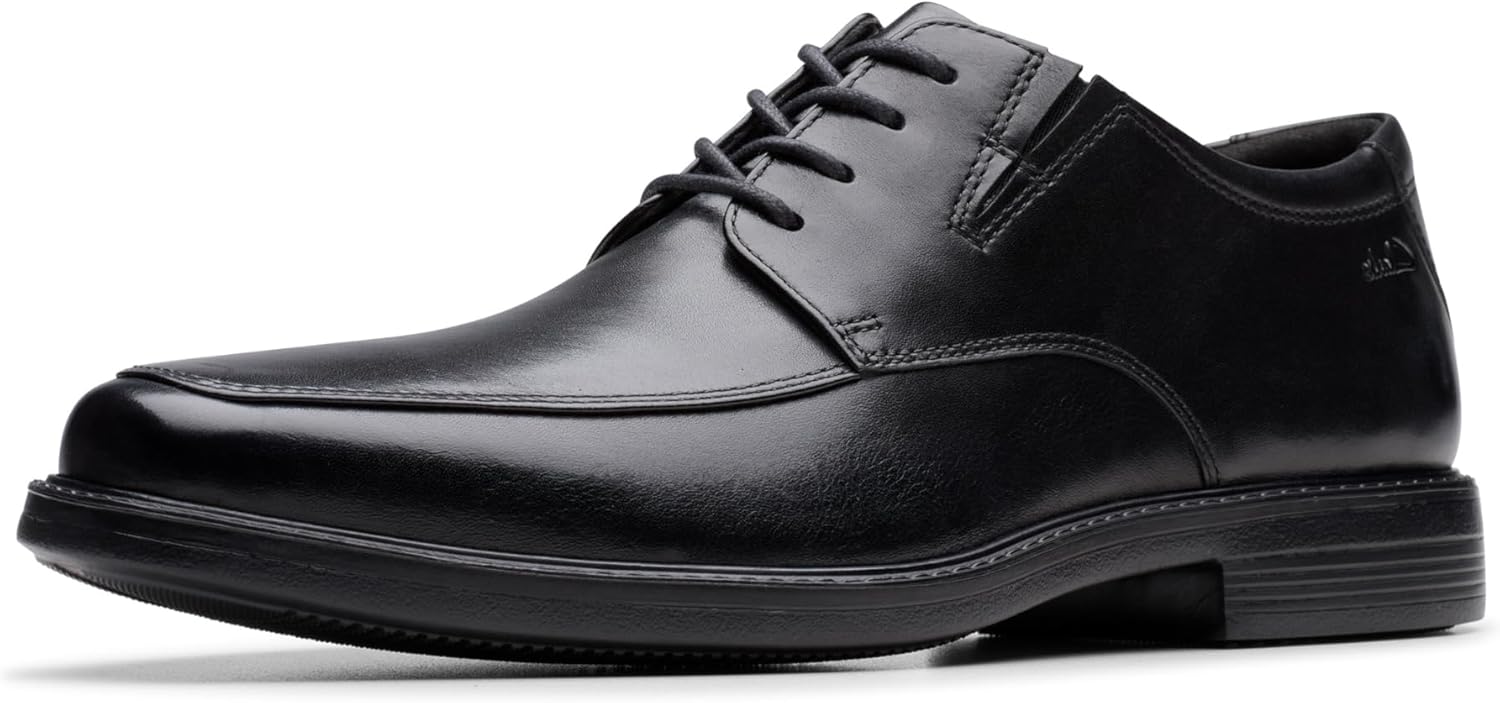
Clarks · Black leather
Clarks Cosgrove Apron Oxford
Amazon describes a premium leather upper, softly squared toe and lightweight impact-absorbing EVA sole.

Clarks · Black leather
Clarks Eastridge Low Oxford
Amazon lists a premium leather upper, stitch-down construction, lace closure, soft foam footbed, and lightweight EVA outsole.
QUICK ANSWERS
Questions shoppers ask next.
Should you measure feet standing or sitting?
Measure while standing with weight distributed naturally. Weight-bearing spreads and lengthens the foot, producing dimensions closer to those present during walking.
What time of day should you measure your feet?
Late afternoon or evening is best because feet often become fuller after normal daily activity. This reduces the risk of selecting a shoe that fits only first thing in the morning.
What if one foot is larger than the other?
Choose the starting size for the larger foot, then refine the smaller side with lacing or a modest insert if needed. Never crowd the larger foot merely to secure the smaller one.
Does foot length determine dress-shoe width?
No. Width and ball circumference must be measured separately, and instep volume and toe shape still require an on-foot test. People with equal length can need very different widths and lasts.