Quick answer: Let wet suede dry naturally before brushing. Stuff the shoes lightly with plain paper or use suitable trees to preserve shape, then place them away from radiators, hair dryers, and direct sun. Heat can shrink, harden, or discolor the hide.
Dry the shoe before treatment
Let wet suede dry naturally before brushing. Stuff the shoes lightly with plain paper or use suitable trees to preserve shape, then place them away from radiators, hair dryers, and direct sun. Heat can shrink, harden, or discolor the hide.
Trying to scrub damp suede pushes soil deeper and smears the nap. Once dry, knock the soles together gently outdoors and identify whether the remaining problem is loose dirt, a water line, salt, or oil; each requires a different response.
Choose crepe, brass or nylon brush
A crepe brush lifts ordinary dust and can restore a flattened nap with relatively low risk. Nylon bristles provide firmer cleaning for routine work. Fine brass bristles can revive tougher suede but should be used lightly and only when the material's care guidance permits.
Keep suede brushes separate from brushes used with cream polish. Pigment and wax transfer can permanently mark the nap. Test the chosen brush on an inconspicuous section before treating the toe or vamp.
Lift dry dirt with grain-aware strokes
Begin with gentle strokes in one direction to remove surface dust, then use short back-and-forth motions only on stubborn spots. Support the upper from inside so the brush works against a firm surface rather than collapsing the shoe.
Finish by brushing the entire panel in a consistent direction. Cleaning only a small circle can create a different texture from the surrounding suede. Even pressure and patience produce a more uniform result than force.
Treat water marks and oily spots
Water marks may respond to a controlled, even treatment across the whole panel with a suede-safe cleaner, followed by natural drying and brushing. Saturating only the stain can leave a fresh tide line. Always follow the product's dilution and ventilation instructions.
For fresh oil, blot without rubbing and use an absorbent powder approved for the situation, then brush it away after sufficient time. Old or large oil stains are difficult; a professional cleaner is safer than household solvents that can spread the stain or strip color.
Restore nap after cleaning
Once the shoe is completely dry, brush lightly in several directions to separate compressed fibers, then finish in one direction for an even appearance. A suede eraser may lift small dry marks, but aggressive rubbing can create a pale patch.
Compare both shoes under the same light. Suede changes shade as the fibers move, so apparent discoloration may be nap direction rather than a remaining stain. Match the brush direction before applying more cleaner.
Apply protector with ventilation and patch test
Use a protector specifically labeled for suede, outdoors or in excellent ventilation. Patch test for color change, hold the can at the recommended distance, and apply an even light coat rather than soaking the upper.
Allow full drying before wear and brush gently afterward if the nap has settled. Protector reduces the speed at which water and soil enter; it does not make suede waterproof or suitable for every storm.
CURRENT AMAZON OPTIONS
Use these as relevant comparison points.
As an Amazon Associate, we earn from qualifying purchases. Amazon links open the exact listing so you can confirm current size, color, price, and availability.

Bruno Marc · Dark Brown
Bruno Marc Urban Suede Oxford
Soft texture lowers the formality while the lace-up shape keeps the outfit intentional.

Clarks · Sand nubuck
Clarks Monahan Plain Oxford
Amazon identifies the Monahan Plain as a lace-up shoe with a sand nubuck upper and comfort-focused construction.
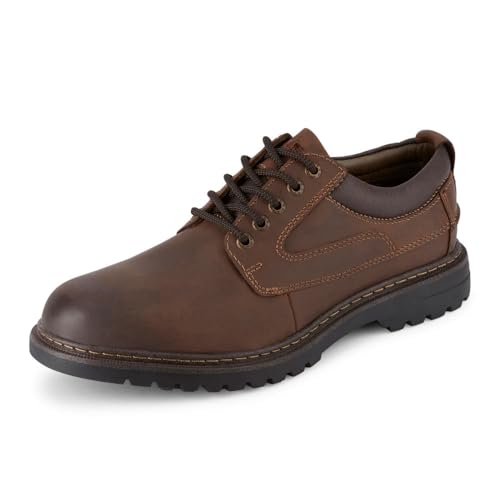
Dockers · Dark Tan
Dockers Warden Leather Oxford with Stain Defender
Leather oxford with multi-layer cushioning, rubber traction, and a stain-resistant finish.

ECCO · Potting Soil nubuck
ECCO Helsinki 2.0 Apron Toe Slip-On
Amazon identifies the Helsinki 2.0 slip-on model and this exact Potting Soil nubuck variant.
QUICK ANSWERS
Questions shoppers ask next.
Can you use water to clean suede shoes?
Limited moisture may be part of a suede-safe cleaning method, but soaking or spot-wetting carelessly can create tide marks. Treat an entire panel evenly, follow the cleaner's directions, and dry naturally.
What brush is best for suede dress shoes?
A crepe or nylon suede brush is the safest routine choice. Fine brass can help with tougher nap only when used gently and when the material's instructions allow it.
How do you remove oil from suede?
Blot fresh oil without rubbing and apply an appropriate absorbent powder, then brush it away after it has drawn out moisture. Large or old stains should go to a professional rather than being treated with harsh household solvent.
Should suede protector be reapplied?
Yes, according to the product directions and after significant cleaning or exposure. Patch test every application and remember that protection reduces staining risk without making the shoe fully waterproof.