Quick answer: Break in dress shoes through several short indoor wears, not one long day. Begin with thirty to sixty minutes using the socks intended for normal use, then remove the shoes and inspect the feet. Increase time only when mild stiffness improves without creating hot spots.
The direct answer for How to Break In Dress Shoes Without Wrecking Your Feet
Break in dress shoes through several short indoor wears, not one long day. Begin with thirty to sixty minutes using the socks intended for normal use, then remove the shoes and inspect the feet. Increase time only when mild stiffness improves without creating hot spots.
Break-in can soften uppers and flex soles, but it cannot add length, move the widest point, or fix a badly matched last. Sharp pain, numbness, and skin damage are reasons to stop and reassess the size while the return option remains available.
How short wears changes the decision
Short sessions reveal whether discomfort is ordinary surface friction or a structural fit problem. Wear the shoes at home on a clean surface, sit and stand, and take normal steps. Allow at least a day between early sessions so any irritation becomes clear.
Increase from an hour to a half day before committing to a commute, wedding, or conference. A pair intended for an important event should be tested weeks ahead, leaving time to exchange it rather than forcing the process under deadline.
How sock choice changes the decision
Use the same sock thickness planned for regular wear. Thick socks may stretch the upper slightly but can also compress toes and disguise the fit that will exist with dress socks. Very thin socks reduce volume and may expose heel movement.
A smooth, moisture-managing dress sock lowers friction better than rough cotton. If one model requires unusually thick socks to stay on, the shoe likely has too much volume. Fit should remain stable with ordinary wardrobe socks.
How friction points changes the decision
Common hot spots occur at the heel collar, little-toe joint, big-toe joint, and top of the instep. Mark the exact location after each short wear. Broad stiffness may ease, while a concentrated edge pressing on bone often persists.
A small amount of preventive moleskin can protect skin during a sensible test, but padding should not be used to justify the wrong size. If the foot bulges over the welt or a seam cuts into a joint, compare another width or last.
How and stop signals changes the decision
Stop immediately for numbness, tingling, burning, blistering, bruised nails, or pain that changes the way you walk. These are not signs that quality leather needs more patience. Continuing can injure the foot and make the shoes ineligible for return.
Persistent heel slip is another warning, especially if tightening the laces causes instep pain. Review length, width, and last shape while the soles remain clean. A comfortable shoe should not require damaging the feet to become wearable.
Common mistakes to avoid with How to Break In Dress Shoes Without Wrecking Your Feet
Avoid soaking shoes, heating them with a dryer, freezing water inside them, or aggressively bending the soles. Those shortcuts can stain leather, weaken adhesives, crack finishes, and void returns. Use shoe-care products only when compatible with the confirmed material.
Do not schedule the first full wear for travel or a ceremony. Bring a tested backup if the new pair must be used early. Gradual flexing and correct fit are more reliable than stretching tricks.
A practical before-you-buy checklist
Before wearing outdoors, verify length, width, ball alignment, heel hold, and instep comfort. Read the return conditions, keep packaging, and preserve the soles. Plan several home sessions across different times of day.
If the shoe improves steadily without creating injury, extend each wear and add normal walking. If pressure remains localized or severe, exchange it. The best break-in plan begins with a pair that already fits the foot's basic shape.
CURRENT AMAZON OPTIONS
Use these as relevant comparison points.
As an Amazon Associate, we earn from qualifying purchases. Amazon links open the exact listing so you can confirm current size, color, price, and availability.
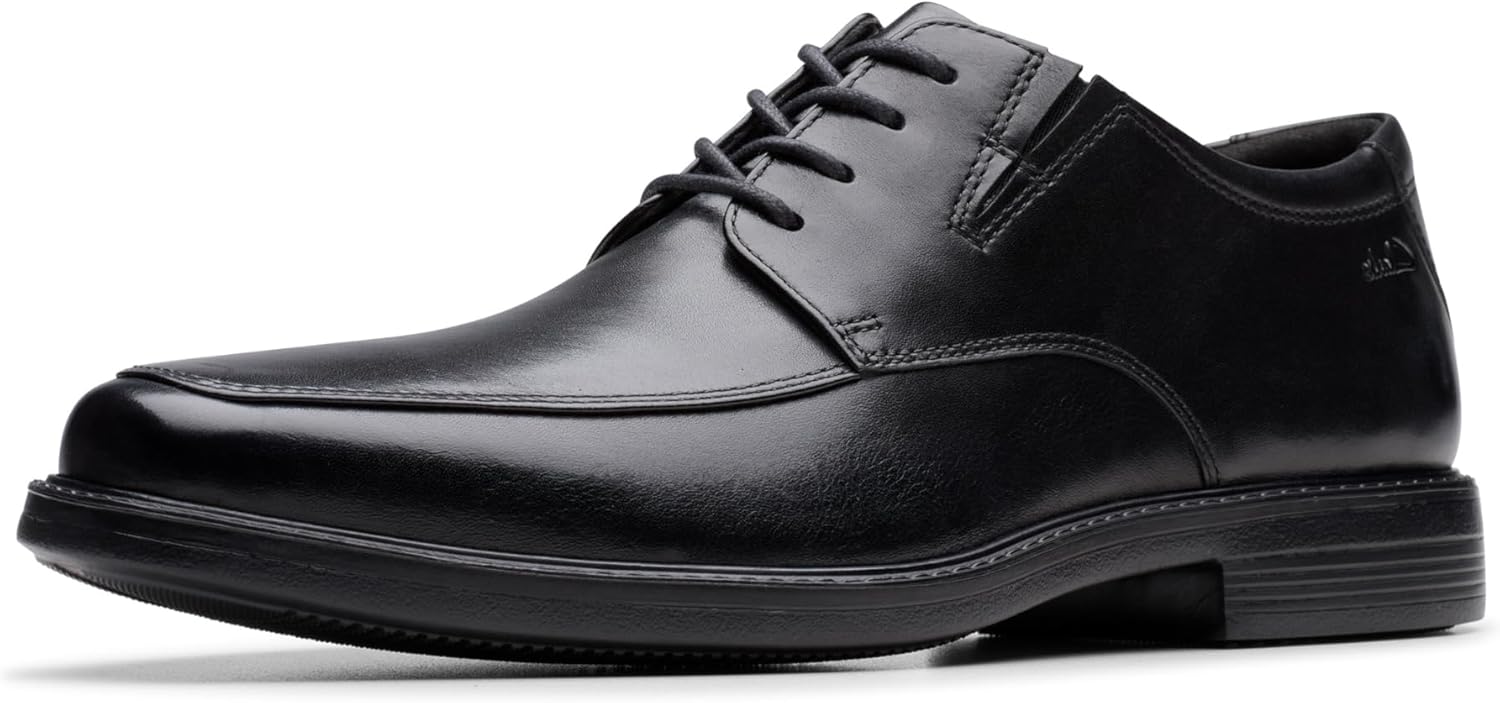
Clarks · Black leather
Clarks Cosgrove Apron Oxford
Amazon describes a premium leather upper, softly squared toe and lightweight impact-absorbing EVA sole.

Clarks · Black leather
Clarks Eastridge Low Oxford
Amazon lists a premium leather upper, stitch-down construction, lace closure, soft foam footbed, and lightweight EVA outsole.

Clarks · Dark tan leather
Clarks Tilden Cap Oxford
A classic cap-toe lace-up offered by Amazon in regular and wide sizing.
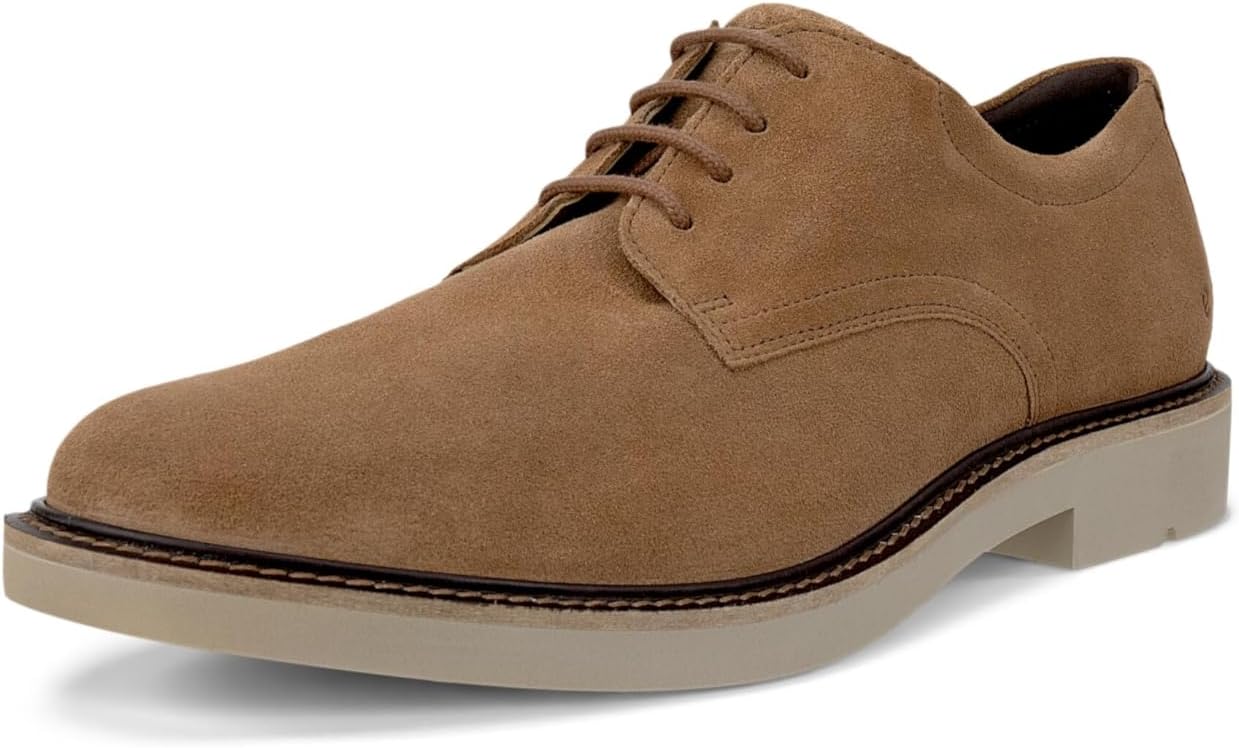
ECCO · Black
ECCO London Plain-Toe Derby
A round-toe derby profile with a removable dual-fit insole on the Amazon listing.
QUICK ANSWERS
Questions shoppers ask next.
What is the first thing to check for how to break in dress shoes without wrecking your feet?
Confirm the shoes are fundamentally the right length, width, and last before attempting break-in. Leather may relax slightly, but it cannot correct misplaced flex or severe joint pressure.
Which common mistake changes the How to Break In Dress Shoes Without Wrecking Your Feet decision most often?
Wearing a new pair for an entire workday or event is the most damaging mistake. Short indoor sessions reveal problems while the feet and the return option are still protected.
How can you confirm short wears for “How to Break In Dress Shoes Without Wrecking Your Feet” before the return window closes?
Complete several clean indoor sessions of thirty to sixty minutes, inspecting the feet after each one. Increase duration only if stiffness decreases and no hot spot, numbness, or blister develops.
What nearby fit choice should you compare while deciding “How to Break In Dress Shoes Without Wrecking Your Feet”?
Compare an adjacent width or a more accommodating last. A width change often solves forefoot or instep pressure more effectively than trying to stretch a fundamentally narrow shoe.