Quick answer: A bunion widens the forefoot near the big-toe joint, so a sharply tapered toe box can press directly on the prominence. Choose a shape that follows the foot's outline rather than forcing the toes inward.
Bunion pressure and toe-box geometry
A bunion widens the forefoot near the big-toe joint, so a sharply tapered toe box can press directly on the prominence. Choose a shape that follows the foot's outline rather than forcing the toes inward.
Round, almond and softly squared toes can work when the widest part of the shoe aligns with the joint. The outside silhouette is only a clue; internal seams and stiffeners also affect usable space.
Width versus volume versus length
Width describes side-to-side room at the ball, while volume includes depth over the toes and instep. A shoe can carry a wide label yet remain too shallow over the bunion.
Sizing longer moves the flex point forward and may cause heel slip without relieving joint pressure. Keep length aligned with the longer foot, then solve width and volume through the last, offered widths and upper design.
Seam placement over the joint
A seam, brogue edge or toe-cap line crossing the bunion can become a concentrated pressure point. Smooth panels with fewer overlays generally reduce friction in that area.
Feel inside the shoe for ridges and reinforcement edges. Decorative stitching visible outside may conceal a thicker internal junction, so the indoor walking test matters more than appearance alone.
Soft leather and stretch limits
Supple leather may conform modestly with wear, but it cannot create a fundamentally wider sole or relocate a stiff toe puff. Stretch should never be the plan for correcting sharp pain.
Synthetic coatings and patent finishes usually give less predictably than soft uncoated leather. Even flexible material can irritate a bunion if the pattern seam sits directly over the joint.
Lacing and removable-footbed options
Derby lacing can provide useful instep adjustment and help settle the heel while leaving forefoot room. Loafers must achieve the same hold through the vamp, so extra width can sometimes introduce heel slip.
A removable footbed may create depth or allow an orthotic, but removing cushioning without a replacement can change fit. Confirm that the foot remains supported and that the heel does not ride above the counter.
Red flags during the indoor fit test
Stop if the bunion feels pinched, hot, numb or visibly pushed over the sole edge. Redness that appears quickly over one seam is evidence of concentrated pressure, not a harmless break-in stage.
Walk, turn and climb a few indoor steps late in the day with the intended socks. If extra length is the only way to gain comfort, try a different last or width instead.
CURRENT AMAZON OPTIONS
Use these as relevant comparison points.
As an Amazon Associate, we earn from qualifying purchases. Amazon links open the exact listing so you can confirm current size, color, price, and availability.
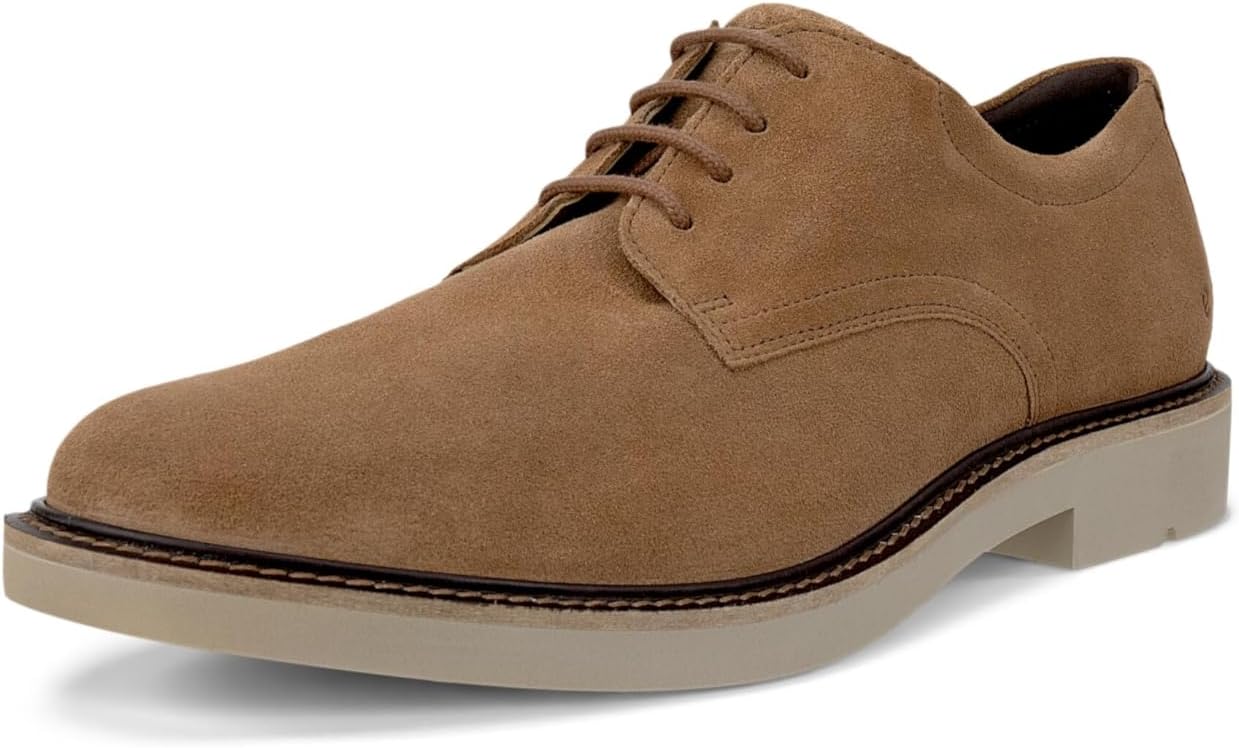
ECCO · Black
ECCO London Plain-Toe Derby
A round-toe derby profile with a removable dual-fit insole on the Amazon listing.

Rockport · Black
Rockport Margin Oxford
A practical plain-toe option for shoppers who prioritize familiar fit and subdued styling.
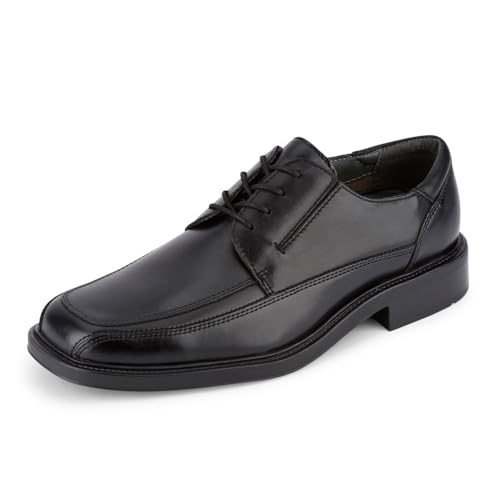
Dockers · Black
Dockers Perspective Leather Dress Oxford
Contemporary leather oxford with an EVA sock liner and gel heel insert.
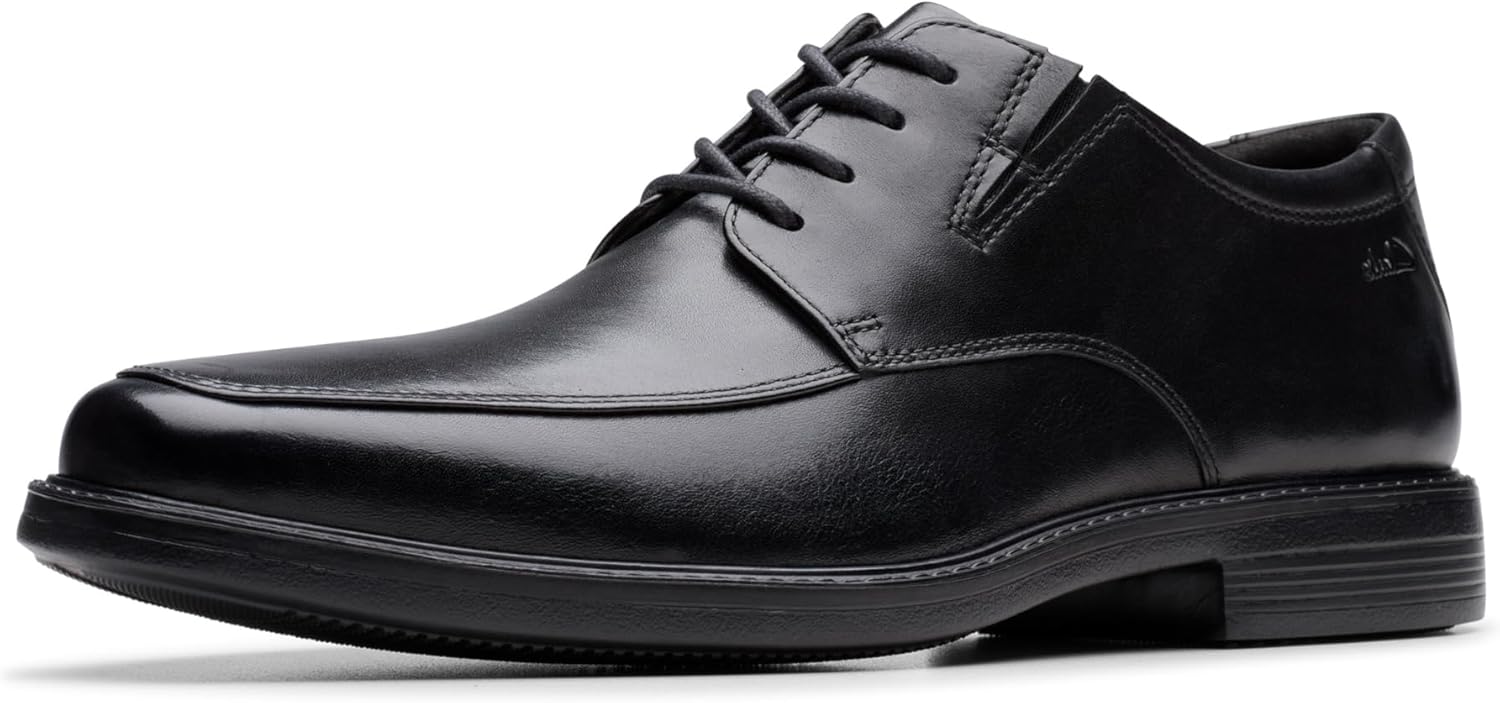
Clarks · Black leather
Clarks Cosgrove Apron Oxford
Amazon describes a premium leather upper, softly squared toe and lightweight impact-absorbing EVA sole.
QUICK ANSWERS
Questions shoppers ask next.
What toe shape is best for bunions?
A round, almond or softly squared toe often provides more usable room than a sharply pointed shape. The best option places the shoe's widest area at the bunion and avoids stiff seams crossing the joint.
Should men size up for bunions?
Not automatically. Extra length can cause heel slip and place the flex point incorrectly. Keep the correct length and look for a wider, deeper last or a model with fewer forefoot overlays.
Will leather dress shoes stretch over a bunion?
Soft leather may conform slightly, but stretching is limited by the sole, lining, seams and toe reinforcement. A shoe that causes sharp pressure when new is the wrong starting point.
Are loafers or lace-ups better for bunions?
Lace-ups, especially Derbies, usually offer more adjustment, while loafers may be easier when their vamp is soft and correctly shaped. Either can work if forefoot room and heel hold are both secure.