Quick answer: A sock occupies space around the toes, ball, instep, and heel, so even a small thickness change can alter the way a fitted dress shoe holds the foot. Thicker fabric may reduce minor looseness but can also push the forefoot against the upper and raise pressure under closed lacing. The effect is greatest in a low-volume or closely fitted last.
How socks change internal volume
A sock occupies space around the toes, ball, instep, and heel, so even a small thickness change can alter the way a fitted dress shoe holds the foot. Thicker fabric may reduce minor looseness but can also push the forefoot against the upper and raise pressure under closed lacing. The effect is greatest in a low-volume or closely fitted last.
Sock thickness does not change the shoe's flex point or basic shape. If the ball sits in the wrong place or the toe box tapers against the foot, a different sock cannot repair the geometry. Treat socks as part of the final fit system, not a substitute for the correct size and width.
Thin dress socks versus cushioned socks
Thin over-the-calf dress socks preserve internal room and create a smooth line with formal trousers. They are the proper fitting reference when the shoe will be used with suits and traditional office clothing. Fine fabric also makes seams and pressure points easier to detect because there is less padding between foot and upper.
Cushioned socks can help with long walking and cold weather, but they may crowd a shoe sized around thin hosiery. Cushion placement matters: padded soles add less instep volume than thick knit around the whole foot. Test the exact sock design rather than relying on a generic light, medium, or heavy label.
Fit testing with the intended sock
Bring or wear the sock planned for real use and test both feet late in the day. Lace normally, then check heel control, instep pressure, toe movement, and ball alignment while standing and walking. A shoe fitted in athletic socks may feel loose later with formal socks.
For a shoe that must cover different seasons, compare the thinnest and thickest realistic socks during the return window. The fit should remain secure without becoming restrictive. If one sock requires painful tightening and the other causes sliding, the last may not offer enough usable range.
Seasonal swelling and moisture
Feet often swell more in heat, after flights, and late in the workday. A thick winter sock tested on a cool morning can hide how crowded the shoe becomes under warmer or longer conditions. Leave functional room without accepting a loose heel at the start.
Fiber and construction affect moisture management as well as thickness. Damp socks increase friction and can make a shoe feel tighter. Rotate dry pairs, change socks after heavy travel when practical, and let shoes dry between wears instead of using extra thickness to absorb persistent interior moisture.
When sock changes can solve minor looseness
A slightly fuller sock can help when the heel and instep have only modest extra space and the ball already aligns correctly. It is most useful as a seasonal adjustment or with a shoe sitting between two close volumes. Recheck toe clearance and circulation after the change.
For loafers, sock thickness strongly affects heel hold because no laces are available. A thin no-show and a cushioned crew sock can make the same loafer behave like two different sizes. Choose the sock category before approving the shoe, rather than alternating unpredictably after purchase.
Why socks cannot rescue the wrong last
Thick socks cannot narrow a heel independently, lower an instep, or relocate a misplaced flex point. They fill every area and may simply trade heel slip for crushed toes. Very thin socks likewise cannot create width where the forefoot overhangs the sole.
When fit requires extreme sock choices, return to size, width, and last shape. A shoe should function with clothing-appropriate socks without improvised compression. Small adjustments are reasonable; a fundamental volume mismatch is not.
CURRENT AMAZON OPTIONS
Use these as relevant comparison points.
As an Amazon Associate, we earn from qualifying purchases. Amazon links open the exact listing so you can confirm current size, color, price, and availability.

Cole Haan · Burgundy
Cole Haan Pinch Tassel Loafer
A heritage tassel shape that brings personality to navy, gray, and cream trousers.

Clarks · Dark tan leather
Clarks Tilden Cap Oxford
A classic cap-toe lace-up offered by Amazon in regular and wide sizing.
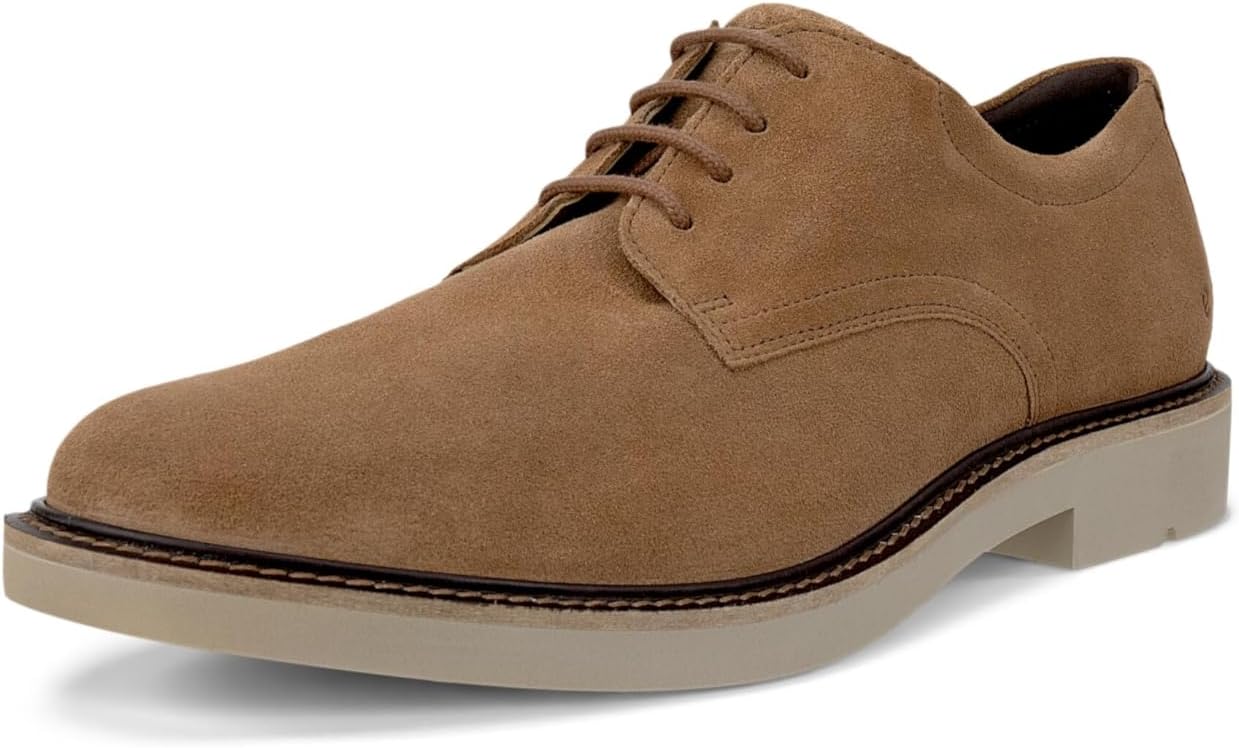
ECCO · Black
ECCO London Plain-Toe Derby
A round-toe derby profile with a removable dual-fit insole on the Amazon listing.

Rockport · Black
Rockport Seaver Oxford
Amazon lists Step Activated entry, moisture-wicking lining, truTECH shock absorption and an orthotic-friendly design.
QUICK ANSWERS
Questions shoppers ask next.
Should men try on dress shoes with dress socks?
Yes. Use the same thickness and height intended for normal wear because socks change internal volume and heel hold. Formal shoes tested in cushioned athletic socks may later feel too loose.
Can thick socks make dress shoes too tight?
Yes. They can crowd the toes, raise instep pressure, and reduce circulation, especially in a closely fitted last. Test the thickest planned sock late in the day before keeping the shoe.
Do no-show socks change loafer fit?
They can. No-show socks vary in sole padding and heel coverage, and a thinner design may increase slip in a loafer fitted with fuller socks. Test the exact pair intended for wear.
Can thicker socks stop heel slip?
They may reduce minor overall looseness, but they cannot correct a heel-shape or instep mismatch without also filling the toe box. Persistent slip calls for a different width, last, or targeted adjustment.