Quick answer: The last is the three-dimensional form around which a shoe is shaped. Two shoes marked the same size can differ in toe taper, heel width, instep height, ball position and overall volume because their lasts differ.
Last shape versus labeled size
The last is the three-dimensional form around which a shoe is shaped. Two shoes marked the same size can differ in toe taper, heel width, instep height, ball position and overall volume because their lasts differ.
A brand-level size reputation is only a starting point. One brand may use several lasts across Oxfords, loafers and comfort lines, so model-specific fit information is more useful than “this brand runs large.”
Length, width, instep and heel combinations
Fit is a combination rather than one number. A wearer can need standard length, wide forefoot space, low heel volume and a high instep simultaneously, and no single size label communicates that shape.
Evaluate heel hold, ball alignment, toe clearance and instep pressure separately. Changing length to solve one problem often creates another, such as moving the flex point or loosening the heel.
Sneaker-to-dress-shoe conversion limits
Sneaker sizes do not convert reliably because athletic shoes use different padding, toe spring, sock assumptions and brand conventions. The same person may wear a different number in running shoes, casual sneakers and welted dress shoes.
Use measured foot length and width as a new baseline, then follow the specific model's chart. Do not automatically subtract a half or full size based on an internet rule.
Brand sizing charts and customer-review traps
A size chart is useful only when it clearly states whether measurements refer to foot length or the shoe itself. Check the country system and width notation before comparing numbers.
Reviews saying “runs small” can reflect the reviewer's foot shape, sock thickness or preferred toe room. Look for repeated, specific observations about heel width, instep or toe taper rather than averaging vague votes.
Comparing two models at home
Order adjacent sizes or two plausible models only when return terms make that practical. Try them at the same time of day with identical socks and compare the same walking route indoors.
Keep the pair that aligns the ball of the foot with the flex point, controls the heel and avoids pressure. Do not let a favorite color persuade you to reinterpret an obviously poorer fit.
Keeping a personal fit record
Record brand, model, size, width, sock type and a few fit notes after each successful purchase. Include whether the heel, instep and toe box felt narrow, neutral or generous.
A model-level record becomes more useful than a generic shoe size and makes future comparisons faster. Update it when foot shape, orthotics or daily swelling patterns change.
CURRENT AMAZON OPTIONS
Use these as relevant comparison points.
As an Amazon Associate, we earn from qualifying purchases. Amazon links open the exact listing so you can confirm current size, color, price, and availability.

Clarks · Dark tan leather
Clarks Tilden Cap Oxford
A classic cap-toe lace-up offered by Amazon in regular and wide sizing.

Rockport · Black
Rockport Margin Oxford
A practical plain-toe option for shoppers who prioritize familiar fit and subdued styling.

Stacy Adams · Black
Stacy Adams Dickinson Cap-Toe Oxford
A traditional cap-toe Oxford with a clean, formal profile and practical budget positioning.
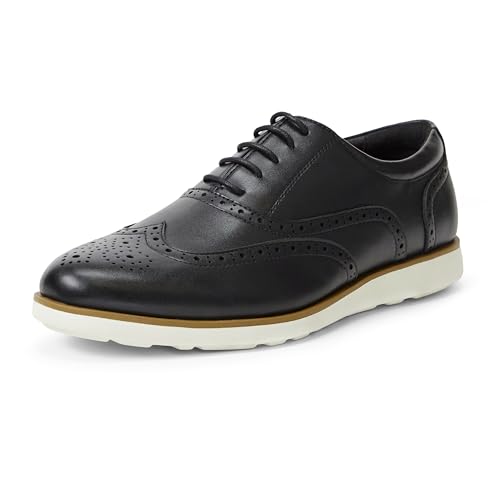
Amazon Essentials · Black
Amazon Essentials Men's Wingtip Derby Dress Sneakers
Hybrid wingtip derby that pairs dress-shoe detailing with a sneaker-style sole.
QUICK ANSWERS
Questions shoppers ask next.
Why am I different sizes in different dress-shoe brands?
Brands and models use different lasts, grading rules and internal padding. The printed size is a label, while actual fit depends on length, width, heel shape, instep height and toe geometry.
Do dress shoes run smaller than sneakers?
Sometimes, but there is no dependable universal conversion. Sneakers often include more padding and toe spring, while dress shoes vary widely by last. Measure both feet and use the specific model's guidance.
What is a shoe last?
A last is the three-dimensional form used to shape the shoe. Its contours influence toe room, ball width, instep volume, heel hold and the shoe's overall silhouette.
Should both feet be measured for every brand?
Measure both feet periodically and fit the longer or wider foot, then confirm the actual model. Feet can differ, and a measurement is only a baseline because each last distributes space differently.