Quick answer: Dress shoes do not universally run smaller than sneakers; they are built on different lasts and are often worn with thinner socks. A person may take a lower numerical size in a dress shoe, the same size, or occasionally a higher one depending on brand, width system, and toe shape. Sneaker size is only a starting reference.
The direct answer for Do Dress Shoes Run Smaller Than Sneakers
Dress shoes do not universally run smaller than sneakers; they are built on different lasts and are often worn with thinner socks. A person may take a lower numerical size in a dress shoe, the same size, or occasionally a higher one depending on brand, width system, and toe shape. Sneaker size is only a starting reference.
The safest method is to measure both feet and follow the current brand chart, then test nearby sizes and widths when possible. Fit the larger foot without letting the smaller one slide excessively. Correct alignment at the ball and heel matters more than preserving a familiar number.
How brand lasts changes the decision
A last defines the shoe's internal shape, including heel cup, waist, instep, toe volume, and flex location. Two models from one brand can fit differently because they use different lasts. Reviews that say a brand runs large may not apply to every line.
Look for model-specific guidance and compare the last with known foot characteristics. A high-volume Derby may fit a high instep in the usual size, while a sleek Oxford from the same company may require a width change or simply be incompatible. Size adjustments cannot correct every shape mismatch.
How sock thickness changes the decision
Athletic sneakers are often fitted with cushioned socks, while dress shoes are tested with thinner over-the-calf or crew socks. That difference can alter perceived volume enough to change heel hold or instep pressure. Always wear the type planned for actual use during sizing.
Do not solve a loose dress shoe solely with a very thick sock if that sock would be uncomfortable with tailoring or in warm weather. Likewise, testing with bare feet can hide how seams and toe space feel in service. A consistent sock makes comparisons between sizes meaningful.
How internal volume changes the decision
Length is only one dimension. A shoe can feel short because the instep is tight and pushes the foot forward, or feel long because the heel and waist do not hold the foot back. Width labels also describe a system, not the exact shape of every toe box.
Examine where pressure appears. Side pressure at the ball suggests width or shape; pressure across the laces suggests instep volume; toes striking the front may indicate length or forward sliding. Changing the correct dimension avoids creating a second problem elsewhere.
How and measurement changes the decision
Measure while standing late in the day, when feet are typically largest. Record heel-to-toe length and ball width for both feet, and note whether the arch length places the ball farther forward than expected. A Brannock-style measurement is useful, but it does not replace trying the specific last.
Recheck measurements after meaningful weight change, injury, or years without fitting. Feet can change over adulthood. Use charts as a candidate-size generator, then confirm with heel control, toe clearance, flex alignment, and an indoor walking test.
Common mistakes to avoid with Do Dress Shoes Run Smaller Than Sneakers
Subtracting a fixed half or full size from every sneaker is unreliable because sneakers themselves vary widely. Another mistake is judging length by empty space in front of a pointed toe; some of that space is intentional and not meant to be filled by toes. Focus on the ball and heel positions.
Do not accept painful tightness because leather may stretch. Smooth leather can relax slightly across pressure areas, but the shoe will not become longer and structured toe caps change little. Fit should be secure and wearable before break-in begins.
A practical before-you-buy checklist
Measure both feet, identify the larger foot, and consult the specific model's chart and width options. Wear dress socks and test late in the day. Order adjacent sizes or widths when returns allow rather than betting on a universal conversion rule.
During the indoor trial, confirm that the heel stays controlled, the ball meets the widest part of the shoe, and the toes lie flat. Walk on a clean hard surface and bend naturally. Keep the pair that fits the foot, even if its printed size differs from the sneaker number.
CURRENT AMAZON OPTIONS
Use these as relevant comparison points.
As an Amazon Associate, we earn from qualifying purchases. Amazon links open the exact listing so you can confirm current size, color, price, and availability.
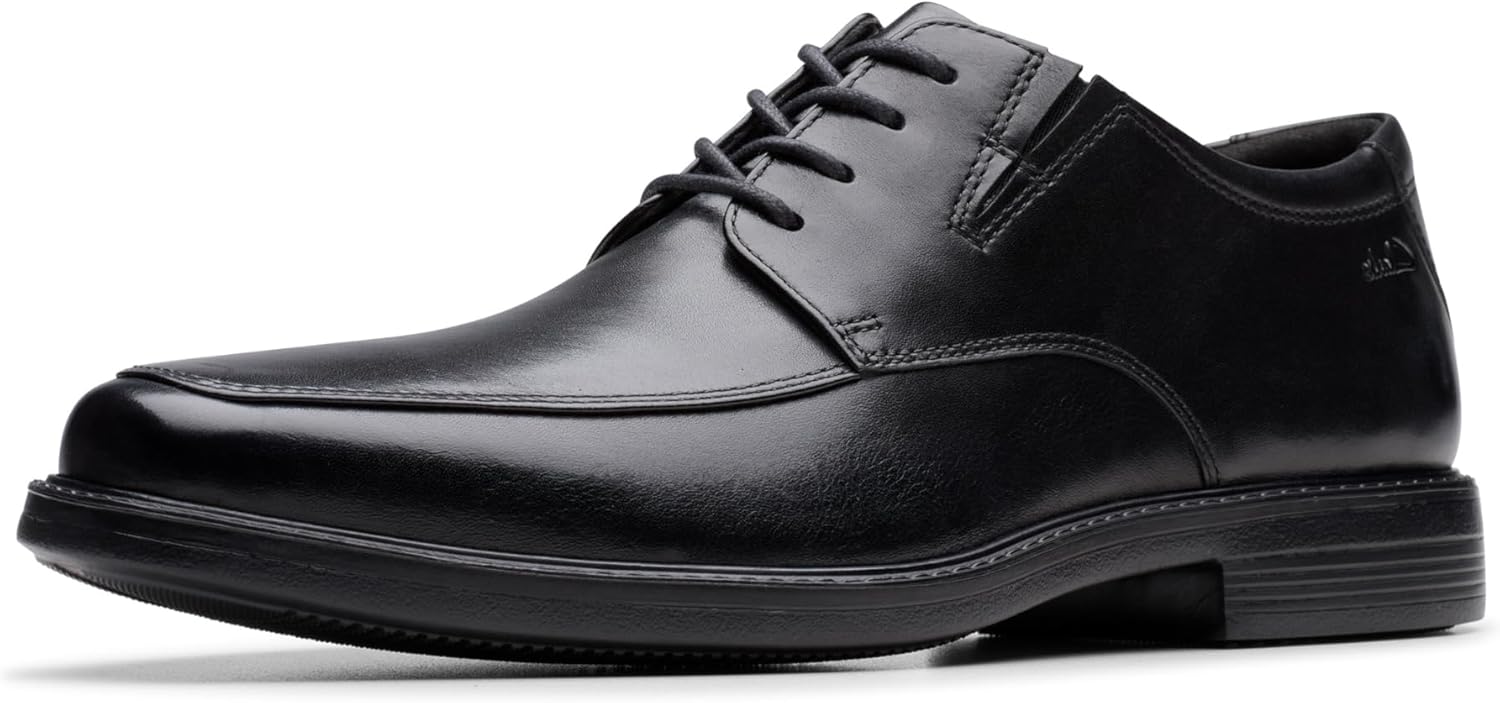
Clarks · Black leather
Clarks Cosgrove Apron Oxford
Amazon describes a premium leather upper, softly squared toe and lightweight impact-absorbing EVA sole.

Clarks · Black leather
Clarks Eastridge Low Oxford
Amazon lists a premium leather upper, stitch-down construction, lace closure, soft foam footbed, and lightweight EVA outsole.

Clarks · Dark tan leather
Clarks Tilden Cap Oxford
A classic cap-toe lace-up offered by Amazon in regular and wide sizing.
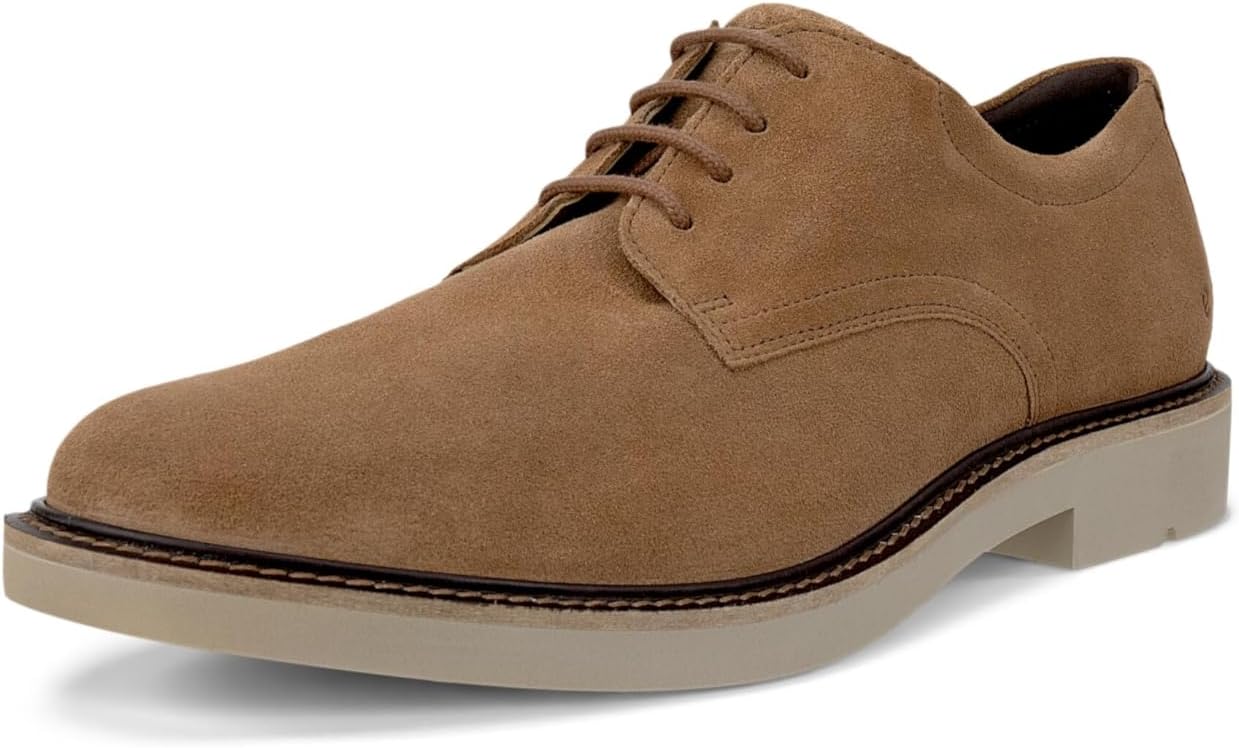
ECCO · Black
ECCO London Plain-Toe Derby
A round-toe derby profile with a removable dual-fit insole on the Amazon listing.
QUICK ANSWERS
Questions shoppers ask next.
What is the first thing to check for do dress shoes run smaller than sneakers?
Check current measurements for both feet and the specific model's size chart. Sneaker numbers vary too much to support a universal dress-shoe conversion.
Which common mistake changes the Do Dress Shoes Run Smaller Than Sneakers decision most often?
Using a fixed rule such as always sizing down one full size causes avoidable errors. Last shape, width, instep, sock thickness, and the sneaker brand all change the comparison.
How can you confirm brand lasts for “Do Dress Shoes Run Smaller Than Sneakers” before the return window closes?
Test the exact model indoors with dress socks and compare adjacent sizes or widths. Confirm heel containment and ball alignment rather than relying only on reviews about the brand as a whole.
What nearby sizing choice should you compare while deciding “Do Dress Shoes Run Smaller Than Sneakers”?
Compare changing width with changing length. If the ball is crowded but the flex point aligns correctly, a wider fitting often solves the problem without adding heel slip or excess toe length.