Quick answer: Black is the default for black tie and the safest choice for a very formal evening wedding. Brown belongs more naturally with lounge suits at formal, cocktail, semi-formal, and daytime events. The invitation sets the ceiling, while suit color and venue decide where within that range the shoe should sit.
Dress-code hierarchy
Black is the default for black tie and the safest choice for a very formal evening wedding. Brown belongs more naturally with lounge suits at formal, cocktail, semi-formal, and daytime events. The invitation sets the ceiling, while suit color and venue decide where within that range the shoe should sit.
A polished black Oxford communicates restraint; a dark-brown cap-toe softens the outfit without making it casual. Light tan and cognac create stronger contrast and should be reserved for lighter tailoring or relaxed settings. When dress-code signals conflict, choose the darker and simpler option.
Navy, blue, gray, charcoal and tan suits
Navy suits work with black, dark brown, oxblood, and many medium browns. Black appears more formal, while dark brown adds warmth without losing authority. Brighter blue suits usually pair more naturally with brown, provided the shoe is not so light that it dominates the outfit.
Charcoal is strongest with black and can work with very dark oxblood; medium gray accepts black or dark brown. Tan, beige, and light-gray suits favor medium to dark brown, especially for daytime weddings. Judge the shoe beside the actual fabric, since undertones and texture change the effect.
Ceremony time and venue
Evening ballrooms, formal hotels, and houses of worship support black or very dark brown. Daytime gardens, vineyards, and coastal venues allow warmer brown tones and more texture. Venue formality should modify the choice, not excuse a shoe that conflicts with the suit.
Outdoor surfaces also affect the sole. A discreet rubber bottom can be more useful on grass or stone than smooth leather, regardless of upper color. Check weather and walking distance before choosing a fragile finish solely because it looks good under indoor lighting.
Groom versus guest considerations
The groom should coordinate with the wedding party and may choose the more formal option to create a clear visual center. A guest only needs to respect the dress code and avoid drawing attention through novelty color or shine. Both should keep leather accessories in a compatible family.
Guests can often reuse a reliable office shoe, provided it is cleaned and appropriate to the suit. The groom has more reason to test the pair with tailoring and photographs well ahead of time. Neither role benefits from choosing a color that is technically allowed but uncomfortable or difficult to walk in.
Leather finish and ornament
Smooth black leather with a plain or cap toe is more formal than heavily brogued black leather. Dark-brown calfskin can remain quite dressy, while suede and pronounced grain move toward relaxed tailoring. Patent should be kept for tuxedo-level formality rather than used to elevate an ordinary suit.
The more ornament a shoe carries, the less its color alone predicts formality. A plain dark-brown Oxford can look more restrained than a black wingtip with bold broguing and contrast edges. Compare the complete silhouette, including sole thickness and hardware, before deciding from a color swatch.
Comfort and break-in timing
Color is irrelevant if the groom or guest cannot stand comfortably through the ceremony. Test heel hold, toe room, flex point, and traction with the intended socks. A dark shoe that fits securely will look more polished in motion than a perfect shade that causes a guarded walk.
Purchase early enough for indoor trials and an exchange, ideally before final trouser alterations. Use short wear sessions instead of aggressive stretching. If two colors work equally well, let fit, current variation availability, and venue traction break the tie.
CURRENT AMAZON OPTIONS
Use these as relevant comparison points.
As an Amazon Associate, we earn from qualifying purchases. Amazon links open the exact listing so you can confirm current size, color, price, and availability.

Stacy Adams · Black
Stacy Adams Dickinson Cap-Toe Oxford
A traditional cap-toe Oxford with a clean, formal profile and practical budget positioning.

Clarks · Dark tan leather
Clarks Tilden Cap Oxford
A classic cap-toe lace-up offered by Amazon in regular and wide sizing.

Florsheim · Cognac
Florsheim Medfield Wingtip Oxford
Decorative broguing and a warm cognac finish make this Medfield variant suitable for navy and mid-gray tailoring.
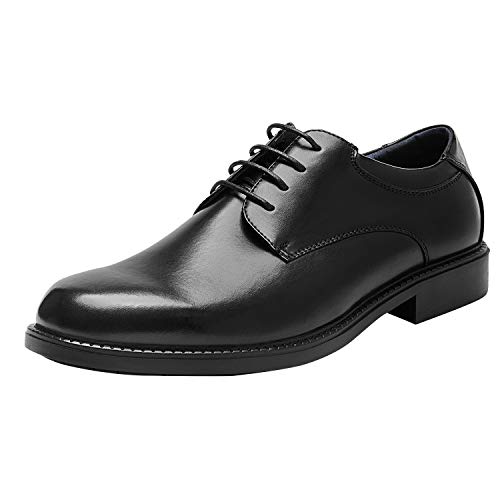
Bruno Marc · Black
Bruno Marc Men's Business Derby Lace-Up Shoes
Classic open-lacing derby with a cushioned latex insole and TPR outsole.
QUICK ANSWERS
Questions shoppers ask next.
Should a groom wear black or brown shoes?
Black suits and tuxedos call for black shoes; navy and blue suits can take black or dark brown depending on formality. The groom should also consider venue, time of day, and wedding-party coordination rather than choosing color in isolation.
Can guests wear brown shoes to a formal wedding?
Usually, when the dress code is formal rather than black tie and the shoes are dark, polished, and paired with a compatible navy or gray suit. For black tie or very formal evening dress, black is safer.
What shoes go with a navy wedding suit?
Black cap-toe Oxfords provide the most formal option. Dark-brown or oxblood lace-ups add warmth and work for most formal and semi-formal weddings, while lighter browns suit relaxed daytime settings.
Do groomsmen's shoe colors need to match?
They should coordinate closely, especially in shade depth, but the shoes do not need to be identical models. A shared instruction such as dark-brown smooth leather with dark soles usually produces a cohesive group.