Quick answer: Black tie traditionally calls for a black patent Oxford or opera pump with minimal decoration. A highly polished plain black calfskin Oxford is the more versatile alternative for a buyer who will rarely wear a tuxedo. In either case, the sole should remain low profile and the toe shape restrained.
Black-tie patent options
Black tie traditionally calls for a black patent Oxford or opera pump with minimal decoration. A highly polished plain black calfskin Oxford is the more versatile alternative for a buyer who will rarely wear a tuxedo. In either case, the sole should remain low profile and the toe shape restrained.
The Jousen Patent Tuxedo Oxford represents the high-shine lane in the current catalog, but the exact material, size, and sole must be checked on the selected listing. Patent coatings can feel less forgiving over pressure points. Test the pair indoors with formal socks and tuxedo trousers before allowing visible creasing.
Black and charcoal suit choices
Black suits are strongest with black shoes, while charcoal generally favors black or very dark oxblood. A cap-toe Oxford supplies a formal, familiar line; a plain-toe Derby can offer more instep adjustment without becoming casual. Heavy broguing and bright sole edges weaken the restraint of these dark suits.
The Stacy Adams Dickinson Cap-Toe and other simple black lace-ups illustrate this practical ceremony category. Shoppers should compare width, toe shape, and sole grip rather than selecting by color alone. A stable rubber bottom may be more useful than smooth leather when the venue includes wet stone or a long walk.
Navy and blue suit choices
Navy supports black for maximum formality, dark brown for warmth, and burgundy for a controlled point of interest. Brighter blue suits pair naturally with medium and dark browns, especially at daytime or semi-formal weddings. Light cognac creates more contrast and should be tested against the actual fabric.
A cap-toe, plain-toe, or restrained wingtip can all work depending on dress code. The Clarks Tilden Cap and Florsheim Medfield Wingtip occupy different points on that spectrum: the cap toe is quieter, while broguing adds texture. The wearer should choose the silhouette that agrees with the suit's structure and venue.
Tan and destination-wedding choices
Tan, beige, and light-gray suits allow medium-brown leather, suede Derbies, and refined loafers. A destination venue often lowers formality while increasing walking, heat, and surface demands. Breathability, secure fit, and a sole that handles sand, grass, or stone become part of the style decision.
Do not interpret beach wedding as permission for any casual shoe. White athletic soles and bulky runners may still disrupt tailored clothing unless the couple specifically chooses that look. A low-profile loafer or soft brown lace-up can remain relaxed while preserving ceremony polish.
Wide-fit and comfort options
A wedding day can involve many hours of swelling, standing, and dancing, so width and internal volume should be confirmed early. Derbies and selected comfort Oxfords often provide more adjustment, but the actual last matters more than the style label. A shoe that compresses the ball will not become acceptable because the ceremony is formal.
Look for verified width choices, removable footbeds when needed, stable heel geometry, and traction appropriate to the venue. Models such as Rockport Margin, Clarks Tilden Cap, and ECCO comfort entries offer useful comparison lanes, not guaranteed winners. Test with wedding socks and the complete tailored outfit.
Break-in and backup-pair checklist
Buy before final trouser alterations and allow time for at least one exchange. Begin with short indoor wears, then practice stairs and dance steps on clean surfaces. Mild sole stiffness can ease, but numbness, sharp pressure, or major heel lift requires a different size or last.
A backup pair is wise for long receptions or uncertain weather, yet it should be tested and coordinate with the same trouser hem. Keep care cloths, suitable polish, and blister supplies available without using them to excuse a bad fit. The wedding should not be the first full day in either pair.
CURRENT AMAZON OPTIONS
Use these as relevant comparison points.
As an Amazon Associate, we earn from qualifying purchases. Amazon links open the exact listing so you can confirm current size, color, price, and availability.

Jousen · Black
Jousen Patent Tuxedo Oxford
A high-shine lace-up reserved for tuxedos and deliberately formal evening dress.

Stacy Adams · Black
Stacy Adams Dickinson Cap-Toe Oxford
A traditional cap-toe Oxford with a clean, formal profile and practical budget positioning.

Clarks · Dark tan leather
Clarks Tilden Cap Oxford
A classic cap-toe lace-up offered by Amazon in regular and wide sizing.

Cole Haan · Burgundy
Cole Haan Pinch Tassel Loafer
A heritage tassel shape that brings personality to navy, gray, and cream trousers.
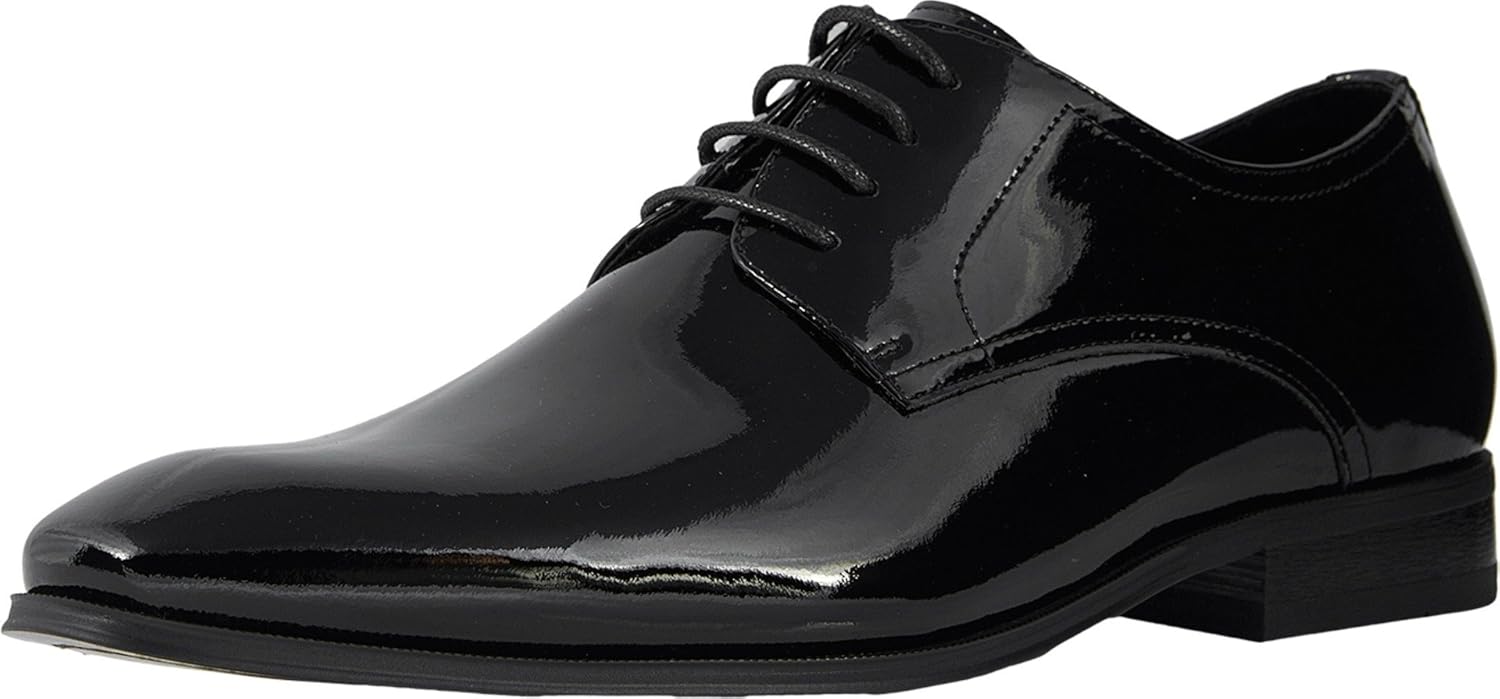
Florsheim · Black
Florsheim Tux Plain-Toe Oxford
A streamlined patent-leather Oxford with a plain toe and a cushioned footbed for special occasions.
QUICK ANSWERS
Questions shoppers ask next.
What shoes should a groom wear?
The groom should match the stated dress code, suit or tuxedo color, venue, and hours on foot. Black patent or polished black suits black tie, while dark-brown lace-ups often work with navy and blue tailoring.
Can a groom wear brown shoes?
Yes, particularly with navy, blue, medium-gray, tan, or beige suits. Dark brown is more formal; lighter cognac and suede belong more naturally to daytime, destination, and relaxed ceremonies.
Are loafers appropriate for weddings?
Refined leather or suede loafers can work for cocktail, semi-formal, and destination weddings when the suit and venue are compatible. Traditional black tie and highly conservative ceremonies usually call for lace-ups.
How early should wedding shoes be purchased?
Two to three months before the wedding is a useful target for standard retail shoes. It leaves time for size exchanges, gradual indoor testing, and final trouser alterations with the actual pair.