Quick answer: Choose black dress shoes by the highest formality needed, then refine toe detail, finish, sole, and fit. A plain or cap-toe Oxford covers suits, interviews, funerals, and many weddings; a Derby offers more instep adjustment; a loafer belongs lower on the formality scale. Black provides discipline, but the complete silhouette determines where the shoe belongs.
The direct answer for How to Choose Black Dress Shoes
Choose black dress shoes by the highest formality needed, then refine toe detail, finish, sole, and fit. A plain or cap-toe Oxford covers suits, interviews, funerals, and many weddings; a Derby offers more instep adjustment; a loafer belongs lower on the formality scale. Black provides discipline, but the complete silhouette determines where the shoe belongs.
For a first black pair, smooth leather and a dark low-profile sole create the widest range. Patent is specialized for black tie, while bold broguing and white soles reduce formality. The pair should work with actual black, charcoal, and navy clothing rather than being purchased as an abstract wardrobe requirement.
How formality changes the decision
Black tie favors patent leather or highly polished plain black calfskin with little ornament. Conservative business and solemn occasions call for cap-toe or plain-toe lace-ups. Business-casual settings can support black loafers, brogues, and discreet rubber-soled hybrids.
Color cannot elevate every design. A black sneaker-bottom wingtip remains less formal than a dark-brown plain Oxford. Assess closure, toe decoration, upper texture, and sole contrast together before deciding that black automatically makes a shoe suitable.
How toe detail changes the decision
A plain toe creates the quietest line, while a straight cap toe adds structure without drawing much attention. Quarter broguing and restrained wingtip patterns introduce texture and move the shoe toward business and social wear. Heavy perforation can look busy beside severe charcoal or black tailoring.
Toe shape affects the impression as strongly as decoration. A balanced round or almond profile stays current across conservative settings, whereas extreme squares and long points dominate the outfit. Ensure the internal shape accommodates the foot rather than selecting a narrow toe solely for appearance.
How leather finish changes the decision
Smooth calfskin accepts cream and wax polish and can move from a soft office sheen to a higher formal shine. Pebbled grain and matte finishes are more relaxed and can hide minor scuffs. Patent has a coated mirror surface that requires different care and should not be treated with ordinary polish without checking instructions.
Synthetic uppers may provide a consistent appearance at lower cost but vary in breathability and how they crease. Read material details for the exact variation because a product family may mix real and synthetic leather. Do not infer composition from a glossy photograph.
How and wardrobe frequency changes the decision
Frequent suit wear justifies a versatile cap-toe with a durable, repairable or easily maintained sole. Occasional funeral or formal-event use may not require the same construction investment, but fit and storage still matter. A rarely worn pair should be tested periodically rather than discovered to be painful on the day needed.
If black shoes are worn several times per week, add a second pair and alternate them. Recovery time lets moisture leave the lining and distributes outsole wear. The second pair can introduce a Derby, loafer, or different sole while preserving the same core color.
Common mistakes to avoid with How to Choose Black Dress Shoes
Assuming all black shoes are equally formal leads to white soles, heavy hardware, or excessive broguing at the wrong event. Another mistake is buying a sharply pointed style that looks sleek in a product image but compresses the toes. Formality does not excuse poor fit.
Neglected black leather shows gray scuffs and dusty welt edges clearly. Do not rely on instant liquid shine as the only care routine, since buildup can look artificial. Brush, condition when appropriate, and use thin polish layers suited to the confirmed material.
A practical before-you-buy checklist
Name the dressiest regular use, then choose the simplest closure and toe that satisfies it. Confirm upper material, width, sole color, traction, and whether patent or ordinary leather is actually selected. Compare the shoe with the intended trousers in daylight.
Test both feet late in the day with dark dress socks. Check ball alignment, heel control, toe clearance, and flex point on a clean hard floor. Keep a basic brush and appropriate black cream available once the pair is accepted.
CURRENT AMAZON OPTIONS
Use these as relevant comparison points.
As an Amazon Associate, we earn from qualifying purchases. Amazon links open the exact listing so you can confirm current size, color, price, and availability.
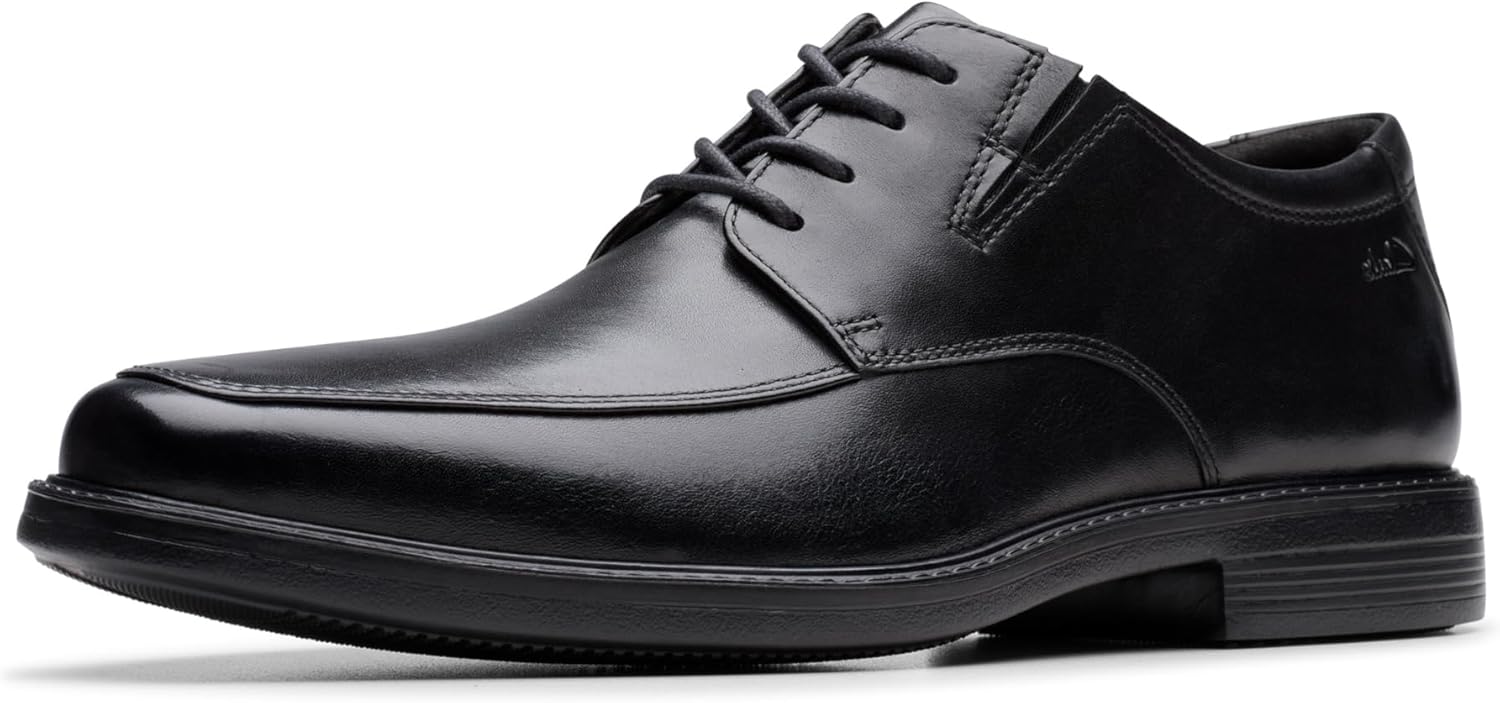
Clarks · Black leather
Clarks Cosgrove Apron Oxford
Amazon describes a premium leather upper, softly squared toe and lightweight impact-absorbing EVA sole.

Clarks · Black leather
Clarks Eastridge Low Oxford
Amazon lists a premium leather upper, stitch-down construction, lace closure, soft foam footbed, and lightweight EVA outsole.

Clarks · Dark tan leather
Clarks Tilden Cap Oxford
A classic cap-toe lace-up offered by Amazon in regular and wide sizing.

Cole Haan · Black leather
Cole Haan Go-To Plain Toe Oxford
Amazon describes a classic leather plain-toe Oxford re-engineered with breathable construction and a cushioned footbed.
QUICK ANSWERS
Questions shoppers ask next.
What is the first thing to check for how to choose black dress shoes?
Check the highest formality the shoes must cover. Black tie, conservative business, funerals, and business casual require different finishes, toe details, and soles even though the color is the same.
Which common mistake changes the How to Choose Black Dress Shoes decision most often?
Treating black color as proof of formality is the biggest mistake. A thick white sole, large buckle, or heavy broguing can make a black shoe too casual for the intended event.
How can you confirm formality for “How to Choose Black Dress Shoes” before the return window closes?
Try the shoes with the exact suit or trousers and assess closure, toe ornament, leather shine, and sole profile together. Photograph the side view, where casual sole contrast becomes easiest to see.
What nearby color choice should you compare while deciding “How to Choose Black Dress Shoes”?
Compare dark brown or oxblood when the wardrobe is dominated by navy, blue, and medium gray rather than black and charcoal. Black remains stronger for maximum formality and solemn occasions.